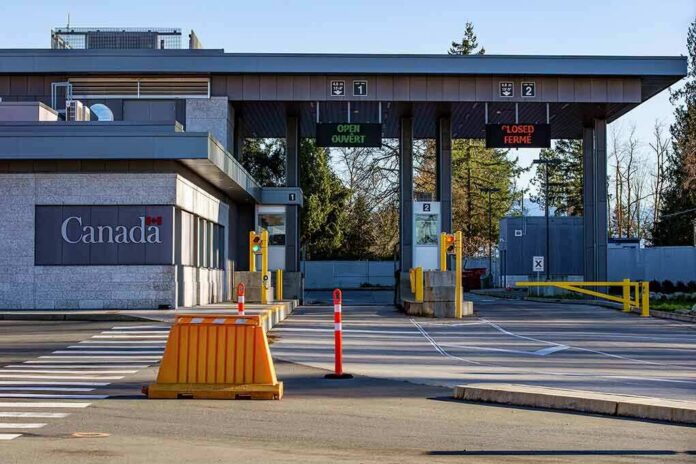
Canada will answer Washington’s 50% tariff hike with “dollar for dollar” counter-tariffs after talks collapsed, signaling a costly trade fight that hits both sides’ workers and wallets.
Story Highlights
- President Trump’s administration moved ahead with 50% tariffs on Canadian goods after negotiations faltered.
- Prime Minister Mark Carney said Canada will match those tariffs “dollar for dollar,” starting September 8.
- Both governments claim to be defending workers, but integrated supply chains raise the risk of blowback.
- Talks paused the tariffs briefly, then collapsed, exposing fragile trust and shifting terms.
What Triggered The Tariff Clash
White House officials announced new 50% tariffs on Canadian products, saying they would level the field for U.S. exporters in cars, alcohol, and dairy, and defend American workers. The move followed months of strain and a short pause that hinted a deal was near. Canadian leaders said the shift came late in talks and called the terms unfair. The tariff order set the stage for immediate retaliation once it became clear no agreement would land in time.
Prime Minister Mark Carney stated Canada will respond “dollar for dollar,” with targeted duties meant to protect steel, dairy, appliances, farm equipment, pulp and paper, and electronics workers. His team framed the step as a focused response, not a blanket surge. Reuters and other outlets reported the Canadian counter-tariffs will take effect on September 8, after Ottawa declared negotiations at an impasse. This approach aims to hit politically sensitive goods while limiting collateral damage at home.
How The Talks Broke Down
Canadian and U.S. officials engaged in intensive talks into late August, and President Trump paused implementation briefly while the sides worked through options. Carney’s August 18 statement said the United States agreed to delay action until end of day August 21, which signaled a narrow window for compromise and fragile trust. After the deadline passed without a deal, both sides blamed each other. U.S. officials said Ottawa refused to finalize terms; Canada said Washington shifted demands late.
Carney had warned provincial leaders in July that Ottawa would defend national interests if talks failed, saying “everything’s on the table”. The government’s message matched a pattern from earlier rounds, when Ottawa used targeted countermeasures, then unwound some duties to manage costs. CBC later reported Canada had quietly lifted more counter-tariffs than it advertised, showing how politics and economics forced a selective strategy rather than pure one-for-one escalation.
What Each Side Says It Is Defending
The White House said the tariffs are needed to offset Canada’s alleged discriminatory treatment of U.S. goods and to protect key sectors at home. The administration framed Canada’s reaction as retaliation instead of negotiation. U.S. trade officials argued they seek fair and reciprocal trade and stronger national security in sensitive industries. That framing tries to rally support by tying trade measures to jobs and security at the same time.
Ottawa said its response is about defending Canadian workers and industries from a sudden, steep tariff shock and from unstable bargaining terms. Carney’s team highlighted specific sectors to signal the move is measured, not maximal. But officials have not released a full tariff schedule yet in the research provided here, so the exact product list, rates, and exemptions cannot be confirmed from public documents at hand. That limits outside review of scope and legal details.
Why This Fight Could Hit Consumers On Both Sides
North American supply chains are tightly woven, especially in autos, food, metals, and retail goods. When one side raises tariffs, costs ripple through factories, farms, and stores in both countries. That means higher prices, delayed shipments, and pressure on small firms with thin margins. Economists and past reports have warned that tit-for-tat duties can backfire, shaving growth while failing to settle the main dispute. That risk grows when politics reward toughness over compromise.
3 PM Top-of-the-Hour News
The trade war between the United States and Canada is intensifying …
The U.S. is imposing 50% tariffs on $20 billion worth of Canadian goods … Canada is setting Sept. 8 as the start of its retaliatory penalties.
President Trump’s import taxes will… pic.twitter.com/82bhnHHWEG— Worldwide News Network (@WorldwideNNX) August 22, 2026
For many Americans, this feels like one more sign that the system serves insiders first. Tariffs often land as price hikes on families and small businesses while large players find workarounds. For many Canadians, the pattern looks similar. Leaders on both sides say they are defending workers, yet the bill often reaches checkout lines long before it hits boardrooms. That mismatch fuels the belief that elites make the rules and regular people pay for them.
What To Watch Next
Watch for Canada’s formal order listing exact goods and rates. That document will show whether Ottawa truly matches “dollar for dollar,” or fine-tunes the hit to reduce self-harm. Track any new U.S. carve-outs or adjustments, which the White House has used before to limit shock in key sectors. Finally, look for a restart of talks. Both governments say they want fair trade, but only clear, public terms and a stable timeline will stop this cycle of brinkmanship and price pain.
Sources:
youtube.com, nbcnews.com, finance.yahoo.com, reuters.com, bbc.com, politico.com