Newport Beach is sending a loud message after its Fourth of July riot: this coastal town is not going to tolerate big-city chaos on its streets and beaches.
Story Snapshot
- More than 400 people were arrested after July 4 crowds turned violent in Newport Beach.
- Police and city leaders blame an alleged social media “TikTok takeover” for drawing agitators.
- Videos show fights, fireworks launched into crowds, and a local grocery store vandalized and looted.
- Most arrests were minors and visitors from outside Newport Beach, raising questions about crowd control and values.
How a Beach Party Turned Into a Riot
Fourth of July in Newport Beach is usually crowded but controlled, with the city posting strict rules that ban all fireworks, public drinking, and street water fights in “safety enhancement zones.” This year, things broke sharply in the opposite direction. Police say a crowd of about 3,000 people packed the Balboa Peninsula, with fights, illegal fireworks, and vandalism stretching across several blocks near the beach and pier. What started as holiday fun quickly became a public safety emergency.
Police were first called around 7 p.m. after reports of large groups lighting fireworks and getting into physical fights near the sand and streets. As officers moved in, the crowd did not calm down. Authorities say people launched large aerial fireworks at close range, threw fireworks into the crowd, and even targeted officers directly. One officer suffered non-life-threatening injuries after someone threw a mortar-style firework at him. Witnesses also reported debris thrown at police and chaos spilling into nearby neighborhoods.
402 Arrests and a Hard-Line Response
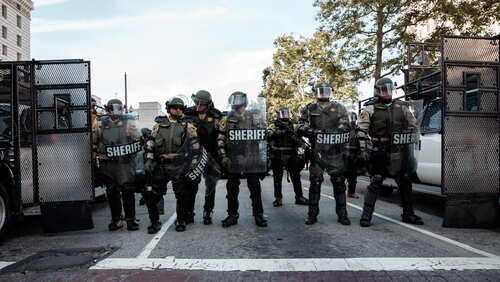
By the time order was restored, Newport Beach police and 17 partner agencies had made 402 arrests across roughly 36 hours, from midnight July 3 to early July 5. NBC and local radio reports say about half of those arrests came in one major incident on the Balboa Peninsula, largely for refusing to leave after officers declared an unlawful assembly. City officials and news outlets describe many of those arrested as minors or visitors from outside Newport Beach, not local residents. This heavy response shows how seriously the city treated the unrest.
Most of the arrests were not for violent felonies but for low-level offenses tied to crowd control, like public intoxication, disobeying police orders, and fireworks violations. However, there were also more serious cases. Reports mention fights, property damage, and looting at the Pavilions grocery store on West Balboa Boulevard, where people broke signs and left the store in disarray. Police also shut down nearby businesses and closed the beaches at one point so officers could clear traffic and push crowds off the peninsula. For many locals, the night looked less like a family holiday and more like a breakdown of basic order.
The “TikTok Takeover” Debate and Deeper Concerns
After the riot, the Newport Beach Police Association posted a statement on Instagram claiming a “TikTok takeover” had drawn a large group of agitators into the city. The union said officers were outnumbered “500 to 1” and praised their courage in restoring order. The association described the crowd as people who came with the intent to cause “harm, injury, and destruction,” including minors who traveled in from other areas. This framing fits a growing pattern where law enforcement blames social media for sudden flash mobs and youth unrest.
Who LA’d Our Orange County??? 🤦🏻♂️🤷🏻♂️🇺🇸💥
All of the Bars and Restaurants went on lockdown. They looted the Pavilions, local fireworks vendors, basically anything they could. Over 100 Arrests…
NEWPORT BEACH: A massive Fourth of July gathering, reportedly organized through TikTok,… pic.twitter.com/425V4NlDdZ
— Eric Rontero (@EricRontero) July 5, 2026
So far, however, there is no public digital proof of a specific “TikTok takeover” campaign behind the Newport Beach riot. News outlets repeat the union’s claim but note that it is based only on the police association’s statement, not on named posts, hashtags, or forensic reports from TikTok. That gap feeds wider frustration that many Americans already feel: they see elites and institutions quick to point fingers, but slow to produce hard evidence or admit failures. Both conservatives and liberals worry about a government that seems better at press conferences than at fixing problems.
For conservatives, this story connects to anger over rising lawlessness, weak respect for local rules, and outsiders trashing communities they do not live in. They see a city that clearly banned fireworks, drinking, and rowdy behavior, yet still got overrun by a crowd that ignored those rules and then strained police resources. For liberals, the image of hundreds of mostly young, non-wealthy people arrested in a rich beach town raises concerns about inequality, policing, and who feels welcome in public spaces. Many on both sides ask whether the system focuses more on dramatic crackdowns than on dealing with deeper social tensions.
The unanswered questions matter. We still do not have a full public accounting of who was arrested, what charges they face, and how many were truly violent instigators versus kids caught up in a sweep. There is also no official independent review yet of how the police handled the crowd, or whether earlier planning could have prevented the crisis. In an era when trust in institutions is low, these blanks feed suspicion that officials protect reputations first and transparency second. The Newport Beach riot is not just a story about one wild night; it is another sign of a country where order, freedom, and fairness feel increasingly out of balance.
Sources:
nypost.com, latimes.com, instagram.com, facebook.com, newportbeachca.gov, hb4thofjuly.org, visitnewportbeach.com, stunewsnewport.com, countynews.tv, abc7.com, tmz.com, hindustantimes.com