The United States military has conducted a series of lethal strikes against vessels suspected of drug trafficking in international waters near the Caribbean. The campaign, which began in September, has been characterized by the Trump administration as a critical escalation of its anti-narcotics strategy and has sparked significant legal and political debate over the use of force in international waters.
Story Highlights
- The U.S. military has carried out 17 lethal strikes on 18 suspected drug trafficking vessels since September 2025.
- At least 70 individuals connected to the alleged organizations have been killed in the operations.
- The Trump administration justifies the actions under counterterrorism authorities, framing cartels as “narco-terrorists.”
- The campaign has prompted questions from critics regarding due process, national sovereignty, and the legal limits of executive power.
U.S. Military Campaign Targets Drug Vessels in Caribbean
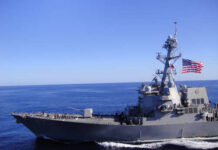
The United States military executed its 17th lethal strike against a suspected drug trafficking vessel in international waters near the Caribbean on November 7, 2025. Defense Secretary Pete Hegseth confirmed the operation, stating it is part of a sustained campaign to disrupt narcotics trafficking routes. Since the campaign’s launch in September, a total of 18 vessels have been destroyed, and at least 70 individuals allegedly connected to narco-terrorist organizations have been killed.
US conducts 17th lethal strike against alleged drug boat https://t.co/VnMKmhQTCl
— ABC7 Eyewitness News (@ABC7) November 7, 2025
Administration’s Justification
The Trump administration has escalated its response to cartel activity by prioritizing direct military engagement. The approach involves classifying drug cartels as “narco-terrorists,” which the administration argues justifies the use of lethal force under existing counterterrorism authorities. Operations are reportedly coordinated with regional partners, including Colombia and France, who have reported seizures and arrests related to the campaign. The administration maintains that these measures are necessary to protect U.S. communities and uphold national security. President Trump has publicly supported the campaign and shared target lists with Senate Republicans to ensure transparency.
Legal and Political Debate
The scope and intensity of the military strikes have generated controversy among legal scholars and some Latin American officials. Critics have questioned the legality of using lethal force in international waters, citing concerns over due process and the sovereignty of nations. The high casualty rate has fueled a debate in the U.S. over the boundaries of executive power and the need for Congressional authorization of military action. The administration maintains that all operations adhere to U.S. law and constitutional protections. However, calls for increased oversight and judicial review are growing among various advocacy groups and lawmakers.
Analysts have suggested that while the campaign may disrupt trafficking in the short term, it carries the risk of long-term instability and an escalation of violence in the region. There are also concerns that the military tactics could strain diplomatic relations with Latin American governments. The campaign represents a significant shift from traditional law enforcement interdiction methods, raising broad questions regarding the balance between security imperatives and civil liberties.
Watch the report: US military kills 3 in Caribbean strike on suspected drug vessel
Sources:
US conducts 17th lethal strike against alleged drug boat – Good Morning America
US conducts 17th lethal strike against alleged drug boat – WBAL
US conducts 17th lethal strike against alleged drug boat – ABC News
2025 United States military strikes on alleged drug traffickers – Wikipedia