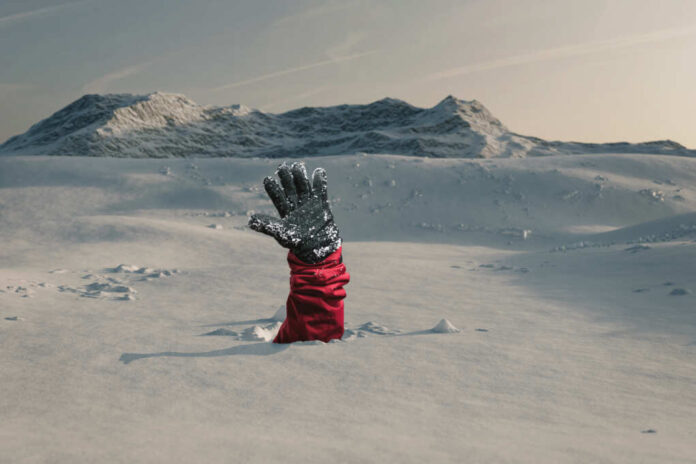
Four American outdoorsmen were swallowed by a Washington mountainside in seconds, and their fate now raises hard questions about safety, personal responsibility, and how government manages our public lands. Two experienced backcountry tourers, Paul Markoff and Erik Henne, were killed in a Jan. 9, 2026 avalanche near Longs Pass, while two companions survived. This tragedy highlights the growing use of federal lands where there is no avalanche control, placing full responsibility on individuals to rely on their own training, gear, and judgment. Rescue and investigation efforts are shaping renewed calls for education rather than new restrictions.
Story Snapshot
- Two experienced backcountry tourers, Paul Markoff and Erik Henne, were killed in a Jan.9, 2026 avalanche near Longs Pass in Washington state, while two companions survived.
- A Garmin satellite device alerted rescuers, triggering a difficult multi‑agency mission involving snowmobiles, helicopter support, and avalanche K9 teams.
- The tragedy highlights growing backcountry use on federal lands, where there is no avalanche control and individuals must rely on their own training, gear, and judgment.
- Rescue and investigation efforts by local authorities and the Northwest Avalanche Center are shaping renewed calls for education rather than heavy‑handed restrictions.
Sudden Disaster in Washington’s High Country
On Friday, January 9, 2026, around 4:00 p.m., four men were traveling through deep winter snow near Longs Pass in northern Kittitas County, Washington, when an avalanche ripped loose and barreled down on them. The group was in remote backcountry terrain within the Okanogan‑Wenatchee National Forest, a rugged alpine zone with no ski patrol, no groomed runs, and no government‑run avalanche control. In that exposed setting, the mountains gave them only seconds to react.
When the snow finally settled, the group’s outcome reflected both the brutality of nature and the difference that preparation can make. One man escaped burial entirely, another was partially buried and injured, and two were fully buried and did not survive. Authorities later identified the deceased as 38‑year‑old Paul Markoff of North Bend and 43‑year‑old Erik Henne of Snoqualmie Pass, both respected members of the Pacific Northwest outdoor community who regularly spent winters in the Cascades’ demanding terrain.
City of North Bend officials and staff were saddened to learn that local resident, Paul Markoff, and Snoqualmie Pass resident, Erik Henne, were killed in an avalanche in Kittitas County, near Longs Pass, on Jan. 9: https://t.co/UyH8QMB9P6 pic.twitter.com/m2UeeVlGCG
— North Bend, WA (@CityofNorthBend) January 12, 2026
Rescue Technology and a High‑Risk Recovery Mission
In the immediate aftermath, the survivors turned to the one lifeline they still controlled: a Garmin satellite communication device carried into the field. That handheld link to the outside world allowed them to send a distress signal despite being far beyond cell service. The alert reached the Kittitas County Sheriff’s Office and Search and Rescue teams, who mobilized snowmobiles and winter rescue gear to reach the remote location while daylight and conditions still allowed safe travel toward the site.
As daylight faded and temperatures dropped, responders managed to reach the two survivors, stabilize them, and transport them out of the backcountry that evening. Hazardous terrain and continuing avalanche danger, however, made it too risky to continue searching steep slopes in the dark for the bodies of Markoff and Henne. Incident commanders paused the operation overnight, balancing the understandable desire to bring the fallen home quickly with an equally pressing duty to avoid adding rescuers to the casualty list in unstable snow.
Morning Recovery, Investigation, and Community Impact
At first light the next morning, the mission shifted from rescue to recovery. A Guardian 2 helicopter from nearby King County joined snowmobile teams and three trained avalanche K9 units to scour the slide path. Working together, they located and recovered both victims, airlifting the bodies to a staging area before transferring them to the Kittitas County Coroner. Along with personal belongings and two snowmobiles, teams carefully removed what they could from the debris, giving families at least the certainty of knowing their loved ones had been found.
Alongside local law enforcement and Search and Rescue, specialists from the Northwest Avalanche Center responded to examine the slide. Investigators documented the scene, burial depths, and snowpack structure and confirmed that one victim was fully buried and killed while the other was fully buried and presumed dead before recovery. Their work will feed into a formal accident report and future safety education, offering other backcountry riders a hard but valuable case study about route choice, terrain traps, and the limits of human reaction time once a slope fractures.
For families in North Bend, Snoqualmie Pass, and the wider Cascade community, the loss is deeply personal. Two men who loved the mountains paid the ultimate price doing what many Westerners consider a basic expression of freedom: traveling under their own power on public land. Their deaths also place fresh emotional strain on local responders, who dedicate countless volunteer hours to pulling neighbors and visitors alike out of dangerous situations that can change in a heartbeat with one fractured snow layer.
Freedom, Responsibility, and the Future of Backcountry Access
Beyond the immediate grief, this avalanche forces a broader conversation familiar to many conservative outdoorsmen. Vast Western landscapes like the Okanogan‑Wenatchee National Forest are magnets for snowmobilers, skiers, and hunters who value open access, minimal regulation, and the chance to test themselves in real wilderness. Those same qualities mean there is no government safety net when slopes fail: no controlled explosions to knock down unstable slabs, no fenced boundaries, and no guarantee that help can arrive before oxygen runs out beneath the snow.
Local authorities and avalanche forecasters are already signaling that the most constructive response lies in stronger education and personal preparedness, not new layers of federal restriction. The detailed account of how a Garmin device, avalanche‑aware rescuers, and coordinated county resources turned a four‑fatality disaster into a two‑survivor story underscores the importance of carrying proper gear and training. For many on the right, the lesson is clear: honor the fallen by learning from their experience, equipping yourself wisely, and defending the freedom to access wild country while accepting the serious responsibility that comes with it.
Watch the report: Deadly avalanche claims 2 snowmobilers in Washington state backcountry
Sources:
- Deadly avalanche claims 2 snowmobilers in Washington state backcountry, 2 rescued
- 2 men killed, 2 rescued from avalanche in Kittitas County, WA
- 2 men killed in avalanche near Longs Pass trail in Washington state
- Backcountry skiers buried by avalanche near Longs Pass, 2 dead