The central fact is not that rhetoric alone is shifting the Middle East; it is that the Trump administration is pairing force with a blunt theory of leverage: hit the proxy, threaten the patron, and make continued pressure costlier than negotiation.
Intro Header
- The administration’s March campaign against the Houthis was explicitly sold as pressure on Iran, not merely punishment of a Yemeni militant group.
- Trump repeatedly warned that future Houthi attacks would be treated as Iranian attacks, with “dire” consequences for Tehran.
- Officials and allied commentators described the strikes as degrading Houthi capabilities, but the harder claim — that this has already forced Iran back to the table — is much stronger as an assertion than as a demonstrated result.
- The deeper pattern is familiar: airstrikes can damage launchers, leadership, and tempo; they rarely prove that a patron state has been strategically coerced.
How the administration framed the campaign
Trump’s message was unusually direct. After authorizing strikes on Houthi-held areas in Yemen, he said the campaign would continue until the Iran-backed group stopped attacking shipping, then escalated the warning by declaring that every Houthi shot would be treated as if it were fired by Iran, which would “suffer the consequences.” That framing mattered because it moved the operation out of the narrow lane of maritime security and into the larger contest with Tehran.
The administration’s public language was not subtle about the objective. Trump’s posts and subsequent coverage presented the strikes as leverage on Iran itself, while senior officials reinforced the same logic by describing the campaign as punishment for a proxy and a signal to its sponsor. In other words, the military action was designed to be read in two directions at once: as immediate retaliation for Houthi attacks and as a coercive message to Iran that the costs of proxy warfare were rising.
What the strikes actually did to the Houthis
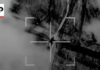
The opening phase was substantial. Reporting from Reuters said U.S. airstrikes killed multiple Houthi leaders, although the exact count was uncertain, and other coverage described a large-scale operation against Houthi targets across Yemen. AP and NPR reported that Trump promised “overwhelming lethal force” and that the strikes hit Houthi-held areas tied to the movement’s maritime campaign. That is a meaningful military action, not a symbolic gesture.
But the effects described in the reporting stop short of proving strategic collapse. The better-supported claim is that the campaign degraded Houthi infrastructure and tempo, at least temporarily. CSIS’s later summary of the operation said the administration had stepped up pressure on a group that had already spent many months attacking shipping, and other analysis noted the Houthis’ buried missile, drone, and launch capacity remained difficult to dismantle. That distinction matters: disruption is not the same thing as submission.
Why Iran was drawn into the center of the story
Trump’s decision to hold Iran responsible for Houthi attacks followed a familiar regional logic. The Houthis are not a mere local gang; they are an armed movement with Iranian backing, and Washington has long treated them as part of a wider axis of pressure on Gulf shipping and regional order. That is why the president’s statements landed as more than bluster. He was signaling that the United States would no longer tolerate a firewall between Tehran and its proxy’s conduct.
The strongest version of the administration’s case is that such pressure can shape Iranian calculations indirectly. If Iran sees its proxy network becoming more expensive to sustain — because launch sites are hit, leadership is disrupted, and shipping attacks provoke immediate retaliation — it may decide that bargaining is preferable to escalation. That is plausible. It is also an inference, not a fact already established by the strikes themselves. The contemporaneous reporting shows intimidation and escalation; it does not, by itself, show Tehran reversing course.
The harder question: coercion or temporary suppression
This is where the evidence becomes more disciplined than the talking points. Across U.S. conflict history, repeated air campaigns against resilient nonstate actors often produce dispersion, adaptation, and short-term suppression more reliably than they produce clean capitulation. The neutral context supplied in the research points to the same pattern in this case: proxy pressure is routinely mistaken for proof that the patron state has been strategically weakened. The Yemen theater is especially prone to that error because the Houthis can act autonomously while still being backed by Iran.
The broader maritime record also cuts against easy triumphalism. BBC reporting later described how, during the 2026 Iran war and related Strait of Hormuz fighting, ship traffic could fall from an average of 138 vessels a day to just a handful when hostilities intensified, showing how quickly regional violence can alter commercial behavior without settling the underlying political dispute. That is the kind of disruption airpower can create. It is not the same as a durable political settlement.
The meaning of the “head for an eye” doctrine
The phrase that circulated around the administration’s posture — a head for an eye rather than an eye for an eye — captures the intended asymmetry. Trump and his advisers were not promising proportionality; they were advertising escalation dominance, the idea that the United States can impose such punishing costs that opponents will back down before the next round. In strategic theory, that is a classic coercive argument. In practice, it depends on the opponent believing two things at once: that the threat is credible, and that continued resistance will not produce a better outcome.
That is precisely why these episodes should be read cautiously. The March strikes, the public threats against Iran, and the later ceasefire episodes around Houthi shipping disruptions all show a pattern of pressure, counterpressure, and bargaining. They do not show a clean, one-way conversion of military force into diplomatic compliance. If Tehran eventually returns to negotiations, the more careful reading will be that force helped create the conditions for talks — not that it conclusively broke Iran’s will.
What to watch in any long-term assessment
The right test is not whether the administration sounded tough; it did. The test is whether Houthi attacks stayed down, whether Iran’s supply and command links were disrupted in a durable way, and whether Tehran altered its regional behavior in ways that endure after the immediate bombing stops. Those are measurable questions, and they take time to answer.
For now, the evidence supports a narrower conclusion than the most aggressive White House framing. The strikes and warnings imposed real costs on the Houthis, elevated the price of proxy warfare, and made Iran the explicit addressee of American coercion. What they do not yet prove is the larger claim that Tehran has been forced back to negotiations on Washington’s terms. That may yet happen. But it is not established merely because the bombs fell and the warnings were loud.
Sources:
facebook.com, npr.org, independent.co.uk, bbc.com, atlanticcouncil.org, youtube.com, thehill.com, en.wikipedia.org, wsj.com, reuters.com