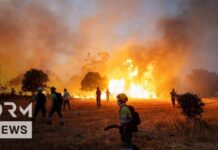
A truck packed with explosives blew up beside a Colombian police station days before the presidential inauguration, injuring 11 and jolting a border city already on edge.
Story Snapshot
- A blast near a police station in Cúcuta injured at least 11 people, including officers.
- The attack came less than a week before Colombia’s new president takes office.
- Officials launched a nationwide alert as investigators search for those responsible.
- The strike fits a pattern of attacks on police amid tensions with armed groups.
What Happened in Cúcuta
Colombian authorities said a truck loaded with explosives detonated next to a police station in Cúcuta, a city on the Venezuela border, injuring at least 11 people on Saturday. The blast damaged nearby buildings and police vehicles, and it struck less than a week before the inauguration of President-elect Abelardo de la Espriella. Reporters at the scene described the vehicle in flames and shattered facades after the explosion, while local officials confirmed injuries among police and civilians.
After the blast, security officials raised a nationwide alert while bomb technicians and investigators collected debris and camera footage to trace the truck’s path. Authorities did not immediately name a perpetrator. However, the location, timing, and target echoed prior attacks that hit police facilities in border and southwestern regions. In February 2025, officials blamed the National Liberation Army for a string of blasts along the border that also targeted police sites.
Why This Timing Raises Stakes
The explosion landed six days before the transfer of power, a moment when governments face added security risks and symbolic strikes can carry outsized impact. In Colombia, armed groups and criminal networks have used attacks near police posts to challenge state control, shape public fear, and gain leverage during talks or crackdowns. In 2025, explosions around police facilities in Cali and nearby towns killed and injured dozens, with officials pointing to insurgent cells behind the attacks. Such patterns push leaders to respond fast, often with troops and raids.
Border cities like Cúcuta are especially vulnerable. Cross-border smuggling, shifting armed groups, and weak local economies give militants room to move and fund operations. In past years, car or truck bombs against police have forced evacuations, strained hospitals, and rattled trade routes. Saturday’s attack fits that playbook. Police posts are seen as soft targets close to neighborhoods and markets, which increases the chance of civilian harm and intensifies fear in daily life. That fear can chill local business and deepen mistrust in public institutions.
How This Fits a Larger Security Pattern
Colombia has seen repeated bombings near police sites over the last several years. In 2019, a car bomb at a police academy in Bogotá killed 22 and injured dozens, and officials tied that attack to the National Liberation Army. In 2025, a wave of blasts hit police stations in the country’s southwest, with deaths reported and authorities blaming insurgent factions. In April 2026, a bombing along the Pan-American Highway killed at least 14 people, heightening national alarm and forcing added patrols on key roads.
Officials often frame these strikes as terrorist attacks early on, even before a group is publicly named. That early framing influences public mood, media coverage, and government action. Sometimes, groups later claim credit; other times, police and military agencies attribute responsibility after arrests or forensic work. The Cúcuta case remains under investigation, but its method, location, and target align with tactics used by insurgent and dissident outfits over time. That history gives weight to the security response while the facts are still being confirmed.
Why Americans Should Care
Border violence in Colombia touches U.S. interests in drugs, migration, and trade. Attacks that rattle police and close roads can disrupt efforts to curb cocaine flows and weaken local partners the United States trains and funds. When security breaks down, families flee unstable areas, which can drive migration north. U.S. taxpayers help fund regional security programs, so Americans want results, not headlines that show the same deadly cycle returning again and again.
🇨🇴 A truck bomb exploded next to the police command in Cúcuta, on Colombia's border with Venezuela, early Saturday (Aug 1), injuring 11 people — 8 police officers and 3 civilians, per the Norte de Santander security secretary (via AFP). Reporters saw the vehicle in flames and… pic.twitter.com/8D22adosk9
— 🔥🗞The Informant (@theinformant_x) August 1, 2026
Many readers—left and right—feel government often reacts after the fact, spends more, and delivers less safety. Colombia’s cycle of “blast, blame, surge, repeat” looks familiar to those who distrust far-off elites and slow bureaucracies. The near-term test is clear: identify who planned the attack, secure the border city without broad abuses, and protect civilians while holding police targets hard. Transparent updates, careful policing, and real arrests would show progress instead of another press conference that fades.
Sources:
bbc.com, ny1.com, youtube.com, english.news.cn, cnn.com, pbs.org