
Defense Secretary Pete Hegseth ordered a new Pentagon plan that would let major U.S. bases run for 90 days without outside help if war cuts power and supplies.
Story Highlights
- The Pentagon launched “FORTRESS America” to harden bases against grid failures and supply shocks.
- Planning targets include 90 days of on-base power, fuel, water, and secure communications.
- A new program office will coordinate energy, stockpiles, and protection measures across services.
- Microgrids and small reactors are among options to keep missions running during a major crisis.
Pentagon sets 90-day self-sufficiency goal for major U.S. bases
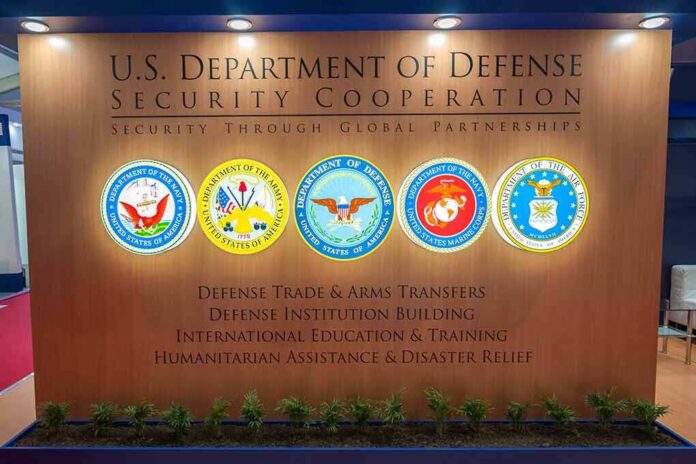
The Department of Defense launched an initiative called FORTRESS America to prepare major U.S. military installations to operate for at least 90 days without outside support if a large conflict disrupts the nation’s power and supply networks. Defense Secretary Pete Hegseth described the plan in a September 30 memo and public remarks, calling it an “insurance policy” for the homeland. Reporting and a fact-check confirm the initiative is real and broadly described accurately in public summaries.
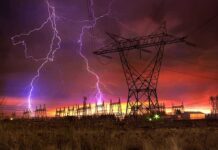
The plan aims to reduce dependence on civilian infrastructure that can fail during cyberattacks, sabotage, storms, or war. Under the approach, bases would build or secure on-site power, fuel, water, and the means to move supplies if usual routes stop. The Pentagon is exploring microgrids, on-base generation, and strategic reserves to ensure critical missions continue if the grid goes down or deliveries halt for weeks. Outlets report the 90-day target as the planning benchmark for most major installations.
How FORTRESS America would work on the ground
Officials are organizing a program office to drive common standards and timelines, according to coverage of Hegseth’s memo. Energy resilience sits at the core. Bases would add microgrids to control multiple power sources, from turbines to batteries, so they can “island” from the outside grid during a crisis. The plan also looks at portable nuclear reactors as a steady power option for critical loads, though final choices will depend on site needs, safety rules, and cost trade-offs.
Fuel and munitions reserves are also in scope. Installations would hold larger on-base stocks to cover weeks of operations if pipelines or rail lines stop. Water systems and treatment backups would protect health and fire safety. Hardened communications, including satellite links, would keep command and control working if fiber lines are cut. Protection steps would include better perimeter security, cyber defenses, and rapid repair teams to restore mission-critical systems after an attack.
Why the Pentagon is doing this now
Past reviews warned that bases lean heavily on the same aging grids and supply networks the public uses. The Government Accountability Office found risks in power access, rising costs, and uneven funding, while noting that multiple sources and microgrids can keep missions going during outages. Service strategies have already pushed energy resilience, but FORTRESS America bundles these efforts under a single, time-bound goal with clearer accountability for results.
The timing reflects growing fears about great-power war, cyber strikes on infrastructure, and long supply lines that can be blocked. Leaders want bases to keep flying aircraft, loading ships, and protecting nuclear forces even if the homefront takes a hit. The 90-day mark is meant to bridge the shock period after a major event. That window gives the military time to adapt, fix damage, and reopen supply routes without losing core combat power.
What success would look like—and what to watch
Success would mean each large installation can power critical missions, pump water, fuel vehicles and jets, move priority cargo, and communicate securely for three months with no outside grid or usual deliveries. Microgrids that island in seconds, fuel farms sized for long outages, and tested backup water systems would be in place. Clear playbooks would guide commanders on which missions get power and supplies first when loads must be shed to stretch reserves.
90 Days Off Grid … Pentagon Plans for U.S. Military Bases to Survive Major War Without Civilian Support
U.S. military preparing if a major war or cyberattack disables civilian power grids, water systems, communications and supply chains.https://t.co/o4P6hsb9VD® Military… pic.twitter.com/8Ke0iwQHwD
— SubX.News® (@SubxNews) October 28, 2026
Challenges include cost, speed, and real-world testing. Building microgrids and extra storage takes money and skilled workers during tight labor markets. Portable reactors raise safety and regulatory hurdles. Leaders will need drills that simulate long outages to prove systems work under stress. Still, prior Army efforts show microgrids can support critical missions, and defense studies back the approach as practical and scalable when designed well for each site’s needs.
Why this matters beyond the base fence line
For citizens who worry that elites let basic systems fail, this move signals a shift to hard, measurable readiness. The Pentagon is planning for worst-case shocks instead of hoping they do not happen. Conservatives see protection of the grid and supply lines as core national defense. Liberals see community safety and disaster readiness as shared goods. Both sides agree that keeping the military ready at home is not optional—it is the job the federal government must do.
Sources:
insiderpaper.com, al.com, foxnews.com, newsweek.com, snopes.com, morningscoop.org, researchcentre.army.gov.au, firearmsnews.com, esd.whs.mil, secnav.navy.mil, apps.dtic.mil