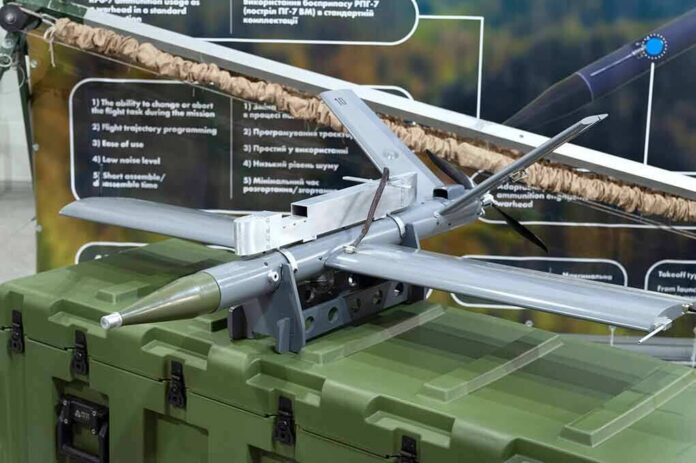
The U.S. Army kicked off a “manufacturing rodeo” to standardize and mass-produce low-cost attack drones, with a strict $3,000 price cap per aircraft.
Story Snapshot
- The Army issued a solicitation to build Group 1 first-person-view attack and loitering drones.
- Each aircraft must cost $3,000 or less, excluding unclear extras like training and sustainment.
- Vendors are asked to deliver 400 flight-ready drones by March 1, 2027, plus 20 control stations.
- Leaders say the rodeo will stress test U.S. supply chains and speed up production learning.
What the Army Is Buying and When
U.S. Army Contracting Command–Detroit Arsenal released a formal call for commercial solutions to produce Group 1 first-person-view one-way-attack and loitering-strike drones. The request sets an initial delivery of 400 flight-ready aircraft and 20 durable ground-control stations. Vendors must deliver 10 percent of the order by February 15, 2027, and the full batch by March 1, 2027. The notice anchors the first Army Manufacturing Rodeo on small uncrewed aircraft as a test of U.S. industrial capacity.
The solicitation caps the unit price of each aircraft at $3,000. That ceiling aims to push designs toward affordable, repeatable builds, not one-off prototypes. The Army frames the effort as a commodity line that can scale if it works. While the price target is clear, the public record does not show what that figure includes beyond the air vehicle itself, such as payloads, radios, batteries, training, spares, or sustainment services.
Required Capabilities and Tough Operating Conditions
The Army’s spec calls for drones that can find, track, and strike moving and fixed targets, from personnel under cover to armored vehicles and command posts. The systems must operate from close combat to extended standoff ranges. The requirement also stresses resilience against heavy electronic warfare. It seeks frequency-agile links, multi-band options, fiber-optic control with no radio emissions, and navigation that can work without satellite signals, such as visual odometry.
These demands track lessons from modern battlefields, where low-cost drones clash with strong jamming and rapid counters. Analysts point to Ukraine’s experience, where cheap airframes matter less than the full system cost and mission effect. Reported prices for similar drones abroad often leave out labor, training, logistics, and control gear. The Army’s approach tries to blend low unit cost with a complete, repeatable kill chain that can survive in a jammed fight.
Why a “Manufacturing Rodeo” and How It Will Be Judged
Acting Army Secretary Adam Telle described the rodeo as a race among industry partners to stress test supply chains and manufacturing processes. The goal is to find weak points early, then fix them before scaling. Leaders say this is not a lab demo. It is a push to prove that American firms can produce standard parts, at speed, in volume, and at a set price—then do it again and again without breaking the line.
The Army's first Manufacturing Rodeo wants commercial drone makers to help standardize and mass-produce a Group 1 FPV one-way attack and loitering strike line, pairing the Army's Organic Industrial Base with commercial design and software speed. It runs as an area of interest…
— AUTOWAR25 (@AUTOWAR25) November 16, 2026
The broader shift in defense buying favors “attritable” systems—good enough to risk and cheap enough to replace. That shift reflects years of frustration over costly programs that arrive late and in small numbers. The rodeo points to a practical test: Can industry deliver hundreds of identical drones on a deadline, tough enough to fight through jamming, and cheap enough to buy by the crate? The solicitation sets the bar. Actual awards, deliveries, and test data will show if the model works.
Sources:
govchime.com, insidedefense.com, a-drones.com