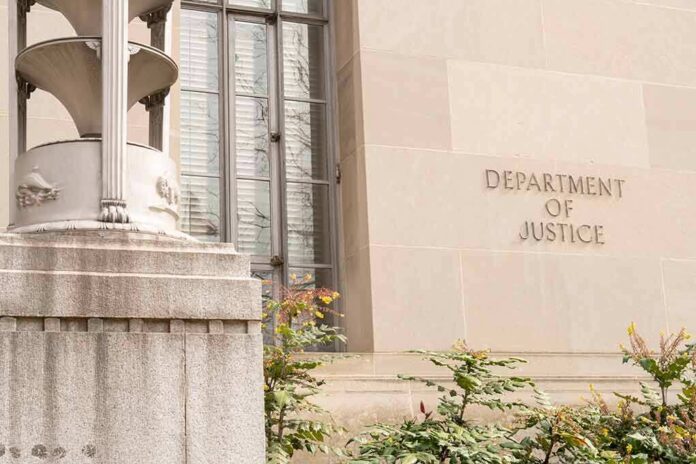
A federal judge forced the Justice Department to explain and release disputed Epstein records that the law says cannot be hidden for anyone’s embarrassment or political sensitivity.
Story Highlights
- A court said the lawsuit over Epstein files is a real dispute under the new transparency law.
- The judge pressed the Justice Department on handwritten FBI notes tied to released interview reports.
- Congress required detailed reporting on what was released, withheld, and why.
- The law bars redactions for embarrassment or political sensitivity, even for powerful figures.
What the Court Is Forcing Into the Open
The court recognized that the case against Attorney General Todd Blanche raises a concrete dispute over duties set by Congress. A June 25, 2026 opinion in the United States District Court for the District of Columbia said the claims are fit for judicial review under the Epstein Files Transparency Act. Later docket activity shows judge-led scrutiny of handwritten Federal Bureau of Investigation interview notes that underlie earlier typed FD-302 reports, signaling concern about whether key source material was withheld.
A published account says the judge rejected the government’s argument that the notes were mere duplicates and ordered release of the handwritten notes and foreign-language materials. The same reporting says the court required Blanche to back up claims that certain redactions in fact shield victim names, not something else. This sequence matters for trust. The court is not taking the government’s word at face value; it is checking the work and demanding evidence that each redaction fits the law.
What the Law Demands—and Forbids
Congress outlawed a common dodge. The statute says no record may be withheld, delayed, or redacted because of embarrassment, reputational harm, or political sensitivity. That includes government officials, public figures, and foreign dignitaries. At the same time, the law preserves narrow carveouts. These include shielding victim identities and child sexual abuse material, and allowing limited, segregable withholdings where other laws or privileges apply, as described by the Department of Justice in its materials.
Congress also required a public accounting. The Department of Justice had to send lawmakers a report listing every category of records released and withheld, and summarizing redactions with their legal bases. The department built an online “Epstein Library” and said it would update the collection if it identifies more responsive documents, which implies the review is ongoing and production could grow. These steps create a paper trail that courts and Congress can compare against the statute’s commands.
Why the Handwritten Notes Matter
The fight over handwritten notes ties to whether typed Federal Bureau of Investigation reports left out details that the law now requires to be public. The docket lists precise Bates numbers for disputed items, including FD-302-linked pages EFTA01245620, EFTA02858481, EFTA02858491, and handwritten-note pages labeled 3501.045 002, 004, and 006. Naming exact records keeps the quarrel concrete. It is not about vibes; it is about identifiable pages the government holds and how the law treats them.
The government controls the files and the review process. That power gap can slow outside checks, especially when redactions cite victim safety or active cases. Research on government record suits shows courts often defer to agencies, though this statute is tighter than ordinary Freedom of Information Act rules. Here, the judge’s move to see unredacted and redacted versions, and to demand proof on specific redactions, narrows that gap and tests whether the government followed the new law’s limits.
The Government’s Defense—and Its Limits
The Department of Justice says its team reviewed more than six million pages and applied redactions to protect victims, remove child sexual abuse material, and avoid harming any active federal investigation. It also says it used qualified attorneys, corrected errors that exposed victim details, and made unredacted versions available to members of Congress for oversight. Those are serious claims that align with the statute’s allowed protections.
But bipartisan sponsors and committee staff questioned whether the department fully met the law’s timelines and reporting duties, noting that hundreds of thousands of pages were redacted or withheld even as the department claimed compliance. The judge’s orders on handwritten notes and proof of victim-name redactions cut to the core issue: are the withholdings narrow, lawful, and consistent? Until the court finishes that check, the public should expect more staged releases rather than a single data dump.
Sources:
youtube.com, congress.gov, justice.gov, law.justia.com, epsteinwiki.com, judiciary.senate.gov