

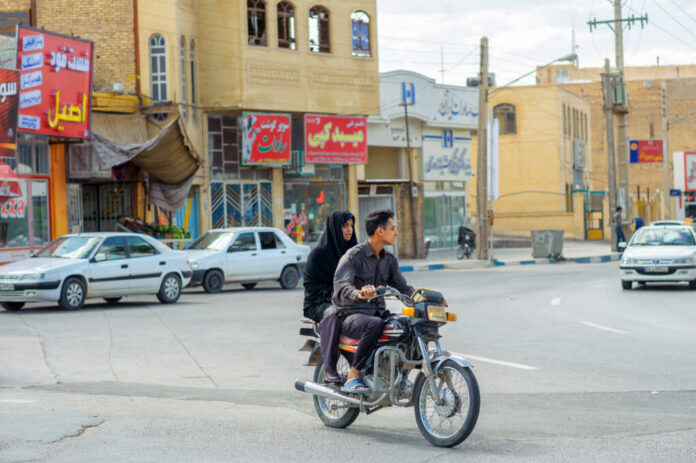
Iran’s regime is quietly admitting a basic truth it spent decades denying: women were already riding motorcycles, and the state’s “rules” were collapsing in real time.
Story Snapshot
- Iran signed a February 3, 2026 resolution directing police to issue motorcycle licenses to women, ending years of legal limbo.
- Authorities previously avoided licensing women despite no clear statutory ban, leaving riders exposed to accident liability and insurance problems.
- Implementation is underway through Iran’s traffic police, including training and exams, but the exact start date for issuing licenses remains unclear.
- The policy arrives after years of unrest and growing public defiance, including women riding openly in major cities.
- Officials are pairing licensing with safety and industry directives, including female instructors and pushes for electric motorcycles and ABS-related standards.
What Iran Actually Changed on February 3
First Vice President Mohammad Reza Aref signed a government resolution on February 3, 2026 ordering Iran’s traffic police to provide training, administer exams, and issue motorcycle licenses to female applicants. Multiple outlets describe the move as ending a long-running gray area in which women rode anyway, but authorities routinely refused to grant licenses. Iranian media reported on February 4 that the implementation phase had begun, though a precise public start date for licensing was still pending.
The mechanics matter because licensing is not symbolic paperwork. Without an official license, women who rode were exposed to heightened legal risk after crashes and had difficulty accessing normal insurance protections. The new directive shifts responsibility onto the state’s enforcement apparatus: traffic police are now tasked with building a formal pipeline for women riders rather than treating them as unofficial exceptions. That change also creates a paper trail—something authoritarian systems typically avoid when enforcing selective rules.
Iran formally allows women to ride motorcycles https://t.co/eCkm4bkcVY via @timesofisrael
— drdivine (@drdivine) February 4, 2026
The “No Ban” Problem—and How Bureaucracy Became a Weapon
Reports point to a key contradiction: Iran’s traffic laws did not always spell out a clean prohibition on women riding motorcycles, yet licensing rules and practices effectively blocked them. One explanation cited in coverage is that licensing language historically referenced “men,” creating a de facto ban through bureaucratic denial rather than a transparent statute. That approach let officials restrict women while dodging accountability, a familiar pattern in systems where the state prefers control through ambiguity instead of clear, challengeable law.
Why the Regime Is Moving Now: Public Defiance and Post-2022 Pressure
Coverage links the move to Iran’s broader women’s rights conflict after the 2022 death of Mahsa Amini in custody and the protests that followed. Reports also describe a recent rise in women riding scooters and motorcycles, including accounts that police often did not interfere. That matters because, in authoritarian settings, inconsistent enforcement is usually a sign of stress: the state must choose which battles to fight. Formal licensing can be read as an effort to regain control of a trend already visible in public.
Watch;
https://youtu.be/18-4Ha-RVfc?si=wXE8Ezc78gEYpfx_
Implementation Details: Police Training, Female Instructors, and Safety Standards
Several reports emphasize that Iran’s law enforcement and traffic agencies are expected to run gender-specific training and testing, including the use of female instructors. Alongside the licensing shift, officials also discussed promoting electric motorcycles and raising safety expectations through standards bodies and industry channels, including references to ABS-related requirements. Those add-ons serve two purposes: they frame the policy as public safety and environmental management, and they keep the state in the driver’s seat by tying women’s new access to supervised programs.
The new policy may reduce day-to-day risk for Iranian women riders, but it also shows how quickly “rules” can be rewritten when a government loses practical control. The exact start date for licensing still matters, because the real test is whether Iran’s security and police structures follow through consistently.
Sources:
Iran formally allows women to ride motorcycles
Iran formally approves motorcycle licenses for women
Iran formally allows women to ride motorcycles
Iran formally allows women to obtain motorcycle licenses
Iran to issue motorcycle licenses to women after government approval
Iranian women get freedom to ride motorcycles after decades under new law
The Insider – Politics