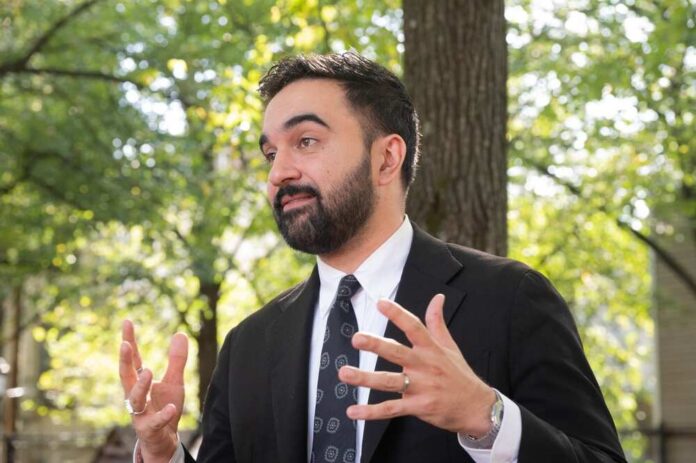
Zohran Mamdani is facing fresh scrutiny over a resurfaced video and a Columbia admissions record that put his identity choices back in the spotlight.
Quick Take
- Reporting says Mamdani checked both **Asian** and **Black or African American** on his 2009 Columbia University application.
- He also explained that he was trying to reflect his background with limited form options.
- The application record came from a hacked Columbia data breach, which keeps the sourcing issue in view.
- The most inflammatory claim, that he bragged about fooling white liberals, is not verified in the materials provided.
What the Columbia reporting showed
The New York Times reported that Mamdani selected both “Asian” and “Black or African American” on his 2009 Columbia University application. Other outlets said he also wrote “Ugandan” in a free-response field, which matched his birth country and reinforced that the form let him describe his background in more than one way. The reporting treated the document as a real admissions record, not a rumor.
Mamdani later said the application did not fit his full identity. In quoted remarks, he said most college applications do not have a box for Indian-Ugandans, so he checked multiple boxes to capture the fullness of his background. That explanation matters because it gives a non-deceptive reading of the form entries. It does not prove he was trying to mislead Columbia or gain an edge.
Why the breach matters
ABC7 reported that the records came from a politically motivated hack of Columbia University’s systems. That detail is important because it makes the source of the material part of the story. The document may be authentic, but it also came from a breach, which means the public saw it outside normal institutional channels. That gives critics and defenders a ready-made argument over context, privacy, and motive.
Columbia has not publicly released the full admissions file in the material provided here, and that leaves basic questions open. The available reporting does not show whether admissions staff used the race fields in any meaningful way, or whether the application was considered under a process that even weighed those boxes. Without reviewer notes or internal guidance from 2009, the link between the form and any admissions outcome remains unclear.
How the political fight is unfolding
The dispute has moved quickly into the larger fight over race, identity, and elite admissions. Conservative outlets and commentators have framed the application as proof of dishonesty, while other coverage has treated it as a narrow story about a mixed-heritage applicant using imperfect categories. That split shows how fast a private admissions file can become a public character test, especially when a candidate is already a national target.
The resurfaced video adds to that cycle, but the supplied material does not verify the most explosive version of the claim tied to it. The record here supports one clear point: Mamdani’s old application choices are real, publicized, and politically charged. What remains disputed is the meaning people attach to those choices, and that debate is being shaped as much by partisan media framing as by the underlying facts.
Sources:
twitchy.com, aljazeera.com, nypost.com, ndtv.com, timesofindia.indiatimes.com, abc7ny.com, thehill.com, dailywire.com