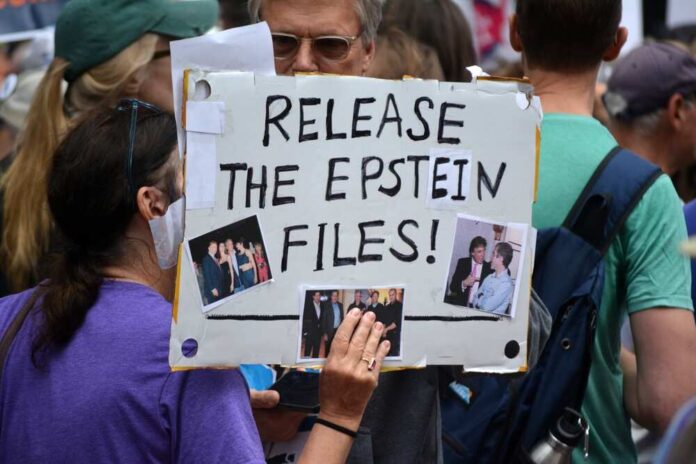
When members of Congress talk about Jeffrey Epstein’s network as if it operated with something like “diplomatic immunity,” they’re not pointing to any actual legal status but expressing frustration with how many questions about his associates still remain unanswered and uncharged.
Story Snapshot
- Rep. Thomas Massie says the Justice Department’s Epstein file dump still hides potential crimes and shields powerful men from scrutiny.
- A bipartisan law written by Massie and Rep. Ro Khanna forced a massive document release and created new oversight of how those files are handled.
- Lawmakers from both parties accuse the Department of Justice of over-redacting names of influential figures while failing to protect some victims.
- Despite the heated rhetoric, there is no public proof that any Epstein associate literally received diplomatic immunity or formal legal protection.
Massie’s “diplomatic immunity” warning and what he actually knows
Republican Representative Thomas Massie has become one of the loudest critics of how the Department of Justice handled the release of more than three million pages of files related to convicted sex offender Jeffrey Epstein. After reviewing the public dump, Massie told a television interviewer there was “no apparent crime that is being detailed from the release of any of these files,” arguing that the material still does not reveal who enabled or benefited from Epstein’s trafficking network. [1] His frustration reflects a deeper belief that powerful figures have been effectively protected from exposure, even if no formal immunity papers were ever signed.
Massie has also raised concerns about how the files were redacted, suggesting that the Department of Justice may have been overly cautious in hiding the names of influential individuals while still disclosing sensitive details elsewhere. Those complaints have come up in congressional oversight discussions involving Attorney General Pam Bondi and the handling of victim privacy versus public accountability. The “diplomatic immunity” phrase, in context, reads more like political shorthand for perceived elite protection than an actual claim of legal status.
The bipartisan fight to pry open the Epstein files
In an unusual bipartisan pairing, Massie worked with Rep. Ro Khanna to push legislation aimed at increasing transparency around Epstein-related records. Reporting on the effort describes it as part of a broader attempt to force more consistent disclosure and limit unnecessary secrecy in how the Justice Department handles the case files. [2] The goal, according to lawmakers involved, was to make sure public records tied to Epstein are not over-redacted or inconsistently released.
Khanna has publicly echoed the argument that accountability should not be weakened by institutional embarrassment or political sensitivity, reinforcing the idea that powerful connections should not block transparency. [3] The collaboration itself is notable in Washington terms, reflecting a shared belief, across party lines, that the Epstein case raised serious questions about whether the justice system applied the same standards to well-connected figures as it does to ordinary defendants.
What the record shows – and does not show – about real immunity
Despite the strong language used in political commentary, there is no public record showing that any Epstein associate received diplomatic immunity, immunity agreements, or formal legal shielding from prosecution. None of the available reporting or statements cited here identifies any treaty-based protection or executive grant of immunity for individuals connected to Epstein. [1][2][3]
What does appear in the record are disputes over redactions, incomplete transparency, and frustration that some investigative details remain sealed or heavily obscured. That gap between what is publicly known and what remains undisclosed is what fuels suspicion. But even critics like Massie are ultimately pointing to perceived accountability failures, not documented legal immunity.
Why this fight resonates with Americans who feel the system is rigged
The struggle over the Epstein files taps into a wider anger that goes far beyond this single case. For conservatives, the notion that global elites could abuse girls, dodge justice, and then hide behind government secrecy fits with long‑standing fears about a ruling class that pushes globalist agendas, ignores border security, and shields its own from consequences. For many liberals, the same story reinforces their belief that the wealthy and politically connected live under a different set of rules, while ordinary people face aggressive policing, stagnant wages, and a shrinking path to the American Dream.
Thomas Massie, who fought hard for the total release of the Epstein File… https://t.co/4fMcSFHa8v via @YouTube
— LaShawn (@LaShawn4566) May 20, 2026
In that sense, the Epstein file controversy has become a symbol of a broader loss of faith in federal institutions under both parties’ watch. Sealed records, half‑answered questions, and partisan sparring over redactions all send the same message: when powerful people are involved, transparency is negotiable. Lawmakers like Massie and Khanna may disagree on almost everything else, but their joint push for sunlight reflects a rare acknowledgment from inside the system that the public is right to be suspicious. Until Americans see a complete, unvarnished accounting of who enabled Epstein and why so many escaped formal charges, talk of “diplomatic immunity” will continue to resonate—not because it is literally proven, but because it captures how rigged the system feels to millions of citizens on both the right and the left.
Sources:
[1] YouTube – ‘Immense frustration’ between Speaker Johnson and Rep. Massie …
[2] Web – Lawmakers request court-appointed official to oversee the Epstein …
[3] Web – Massie on Epstein files: ‘We can’t avoid justice to avoid … – Ro …