Trump’s Versailles memorandum promises peace and cheaper oil, but it also hands Iran leverage and leaves big questions hanging.
Story Snapshot
- Trump signed a 14-point memorandum with Iran at Versailles that ends the shooting war and starts reopening the Strait of Hormuz.
- The deal is an interim framework, not a final peace treaty, with 60 days of follow‑on talks still to come.
- Iran wins fast sanctions relief, oil money, and a promised $300 billion reconstruction fund if it follows through.
- Key issues like nuclear limits and long‑term control of the Strait are delayed, raising worries about Iran’s future power in the Gulf.
What Exactly Did Trump Sign At Versailles?
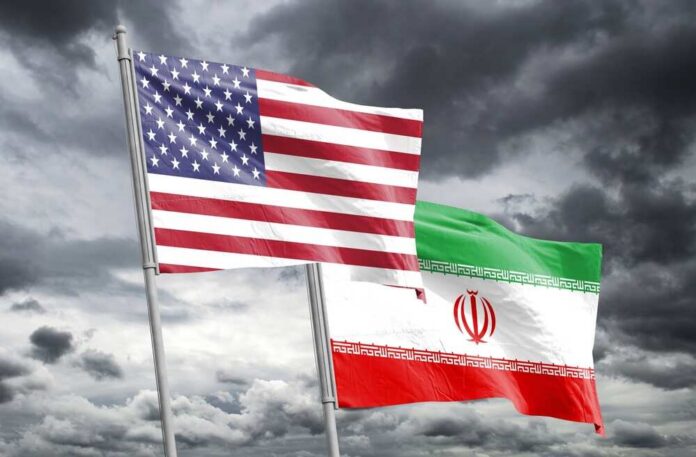
At the Palace of Versailles in France, President Donald Trump signed a 14-point memorandum of understanding with Iran during a Group of Seven dinner hosted by French President Emmanuel Macron.[2] The White House and multiple outlets say this document declares an immediate end to military operations on all fronts, including Lebanon, and lays out steps to end the U.S. naval blockade and reopen the Strait of Hormuz for global shipping.[1][11] Iran’s president Masoud Pezeshkian has also signed, making it a real bilateral commitment, not just talk.[2]
The text released by news organizations and read out by senior U.S. officials shows that this is an interim framework, not a full peace treaty.[10][11] The memorandum declares the war “immediately and permanently” over and orders both sides to stop using or threatening force, while promising Iran toll‑free shipping in the strait for 60 days as the blockade is lifted in stages.[10][11][19] At the same time, it opens a 60‑day window of new nuclear negotiations in Switzerland instead of locking in final nuclear restrictions now.[10][13]
How The Deal Ends The Fighting And Reopens The Strait
The first and most concrete piece of the memorandum is the ceasefire. The text says the United States, Iran, and their allies “declare the immediate and permanent termination of military operations on all fronts, including in Lebanon,” and pledge not to attack each other going forward.[10][12] That means, on paper, an end to U.S.–Iran fighting and a pause in the wider clash involving Israel and the Iranian‑backed group Hezbollah, at least as far as U.S. and Iranian forces are concerned.[3][23]
The second pillar is energy and shipping. The memorandum instructs the United States to start removing its naval blockade right away and to end it fully within 30 days, while Iran “will make arrangements using its best efforts for the safe passage of commercial vessels with no charge for 60 days” through the Strait of Hormuz.[10][11] Earlier drafts and briefings stressed that traffic should ramp up quickly and reach normal levels in about a month, giving the world relief from the war‑driven spike in oil prices.[15][24]
What Iran Gets: Oil Money, Sanctions Relief, And A Huge Fund
For Iran’s regime, the Versailles memorandum is a major economic win. The text and officials’ readouts say Iran can begin exporting oil and other petroleum products “immediately” after signing, helped by U.S. sanctions waivers that allow sales and related banking, insurance, and shipping services.[12][17] Reports also describe a reconstruction and development plan worth at least $300 billion for Iran, backed by the United States and regional partners and tied to later nuclear compliance.[1][19]
Western coverage emphasizes that many sanctions are suspended or eased rather than permanently removed, and that full lifting would only follow a final nuclear deal and verified steps by Tehran.[3][12][23] Still, in the near term this means fresh cash for a regime with a long history of funding proxy militias like Hezbollah and the Houthis, even if the memorandum itself does not spell out detailed oversight on how those new funds are used.[3][23] That tradeoff is exactly what worries many hawks in Washington and Jerusalem, who see Iran gaining financial breathing room without locking in deep nuclear cuts yet.[23]
Why This Is Only A First Step, Not Full Peace
Despite the “peace deal” headlines, experts across the spectrum describe the Versailles memorandum as an interim ceasefire framework more than a final settlement.[7][23] The full text, as published by several outlets, makes clear that some of the hardest nuclear and sanctions issues are kicked to later talks, with a “maximum” 60‑day period for negotiators to reach a final deal that can be extended by mutual consent.[10][13][19] That structure closely mirrors earlier Iran tracks, where implementation and enforcement came months after a political announcement.[20][21]
This delay raises real strategic questions for conservatives. Analysts warn that reopening Hormuz and loosening sanctions now, while deferring nuclear limits and questions about Iran’s future control of the Strait, risks repeating a pattern where Tehran gets upfront benefits and the West gets promises and process.[3][22][23] Some reports even flag that after the 60‑day toll‑free period, Iran and Oman could seek more lasting say over shipping, potentially including future fees, which would hand a sworn U.S. adversary new leverage over global energy flows if not checked by a tougher final deal.[3][5]
Sources:
[1] Web – At Versailles, Trump Signs Iran Peace Deal
[2] Web – TRUMP SIGNS IRAN PEACE AGREEMENT AT G7 SUMMIT U.S. …
[3] Web – June 17, 2026 – Trump signs US-Iran agreement – CNN
[5] Web – President Trump signed the Iran Memorandum of Understanding …
[7] Web – U.S. President Donald Trump signed the Iran Memorandum of …
[10] Web – Trump and Iran’s president sign framework agreement at Château …
[11] Web – Text of US-Iran memorandum released
[12] Web – READ: Full text of U.S.-Iran memorandum of understanding – Axios
[13] Web – Read the 14 points of the agreement between Iran and the U.S.
[15] YouTube – CNN obtains US-Iran draft agreement: What its 14 points reveal
[17] Web – Iran and the US released details of a memorandum of … – Facebook
[19] Web – Senior U.S. officials dictated the memorandum of understanding with …
[20] Web – What’s in the deal between the US and Iran? – BBC
[21] Web – Fact Sheet: The Iran Deal, Then and Now
[22] Web – 2025–2026 Iran–United States negotiations – Wikipedia
[23] Web – The Folly of an “Interim” Agreement with Iran
[24] Web – Experts react: The US and Iran just announced an interim peace …