
President Trump said he urged Vladimir Putin to pull back all military aggression across Europe to speed a peace deal in Ukraine.
Story Highlights
- Trump said he pressed Putin in China to reduce military actions across Europe.
- Trump tied the request to quick peace talks between Russia and Ukraine.
- Trump called the war a “bloodbath,” saying thousands die each month.
- Trump briefed NATO chief Mark Rutte; both stressed preventing war expansion.
Trump’s Stated Message to Putin and Goal for Ukraine
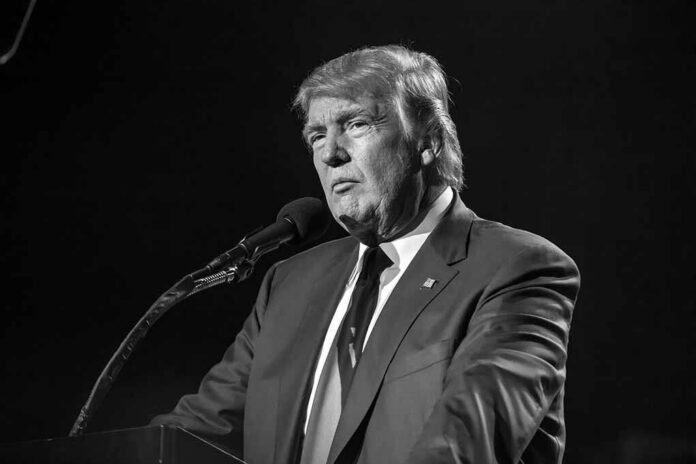
President Trump wrote that, during conversations in China with Russian President Vladimir Putin, he urged a pullback of “all Military aggression” against territories throughout Europe. He said he made the request to help spark quick talks between Russia and Ukraine. Trump framed the aim as ending a deadly conflict fast, and said large numbers of people are dying each month as fighting continues. The public statement came through his post on his social media account.
Trump’s post also cast the war in stark terms. He called it a “COMPLETE BLOODBATH” and argued that speed matters for saving lives. His claim about thousands dying each month expressed urgency but did not include a source for the figure. The statement did not list which battlefronts or specific actions he wanted reduced. It did not identify exact steps Moscow should take to show a real pullback or a timetable for changes in the field.
Follow-up With NATO and Shared Emphasis on Restraint
After the China talks, Trump said he met with North Atlantic Treaty Organization (NATO) Secretary General Mark Rutte at Mar-a-Lago and briefed him. A joint message from their meeting highlighted two points. First, Russia should avoid actions that could expand the war, on purpose or by mistake. Second, both sides said a peaceful resolution should come as fast as possible. The statement did not set conditions or name concrete enforcement tools.
The wording about “aggression throughout Europe” drew wide coverage because it is broad. Reports described it as a call for Russia to stop hostile moves in Europe or to back off beyond Ukraine. Some outlets focused on the link to Ukraine peace talks. Others stressed the warning against widening the war. The lack of specifics left room for different readings by allies and critics across the region.
How This Fits Wartime Diplomacy Patterns
Public accounts of private talks often serve as signals to many audiences at once. Governments sometimes use such messages to shape pressure, set expectations, or test reactions. Analysts of the Russia‑Ukraine war have said Moscow may delay real deals if battlefield trends seem favorable. That view holds that Russia can talk while still pushing for gains, slowing any ceasefire path unless the costs rise or military prospects fall.
Trump said he would like to see Russian President Vladimir Putin "pull back all military aggression against territories throughout Europe"https://t.co/9aXB39LQ6N
— TIME (@TIME) November 26, 2026
This moment also reflects a shared fear among many Americans. People on the right and left see a grinding war, rising costs, and leaders who speak in broad terms without clear results. Trump’s message claims personal leverage and a fast path to peace. Supporters may welcome any step to stop the bloodshed. Skeptics will watch for proof on the ground. For now, the record shows a high-level appeal, a NATO briefing, and strong words, but no listed next steps that the public can track.
Sources:
facebook.com, reuters.com, barrons.com, newsweek.com, kyivindependent.com, thehill.com, independent.co.uk, newsukraine.rbc.ua