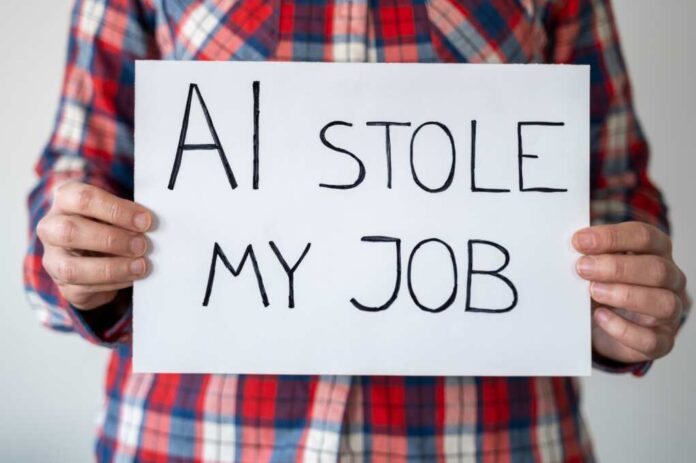
Artificial intelligence and self-driving technology are no longer a futuristic vision but a present-day reality rapidly transforming life and work. As millions of jobs in driving, logistics, and delivery face direct pressure from automation, policy elites are proposing a “1 percent solution”—a plan to dedicate a small portion of economic output to cushion displaced workers. However, for conservative, work-oriented families, this proposal is a stark choice: an acceptance of permanent dependency managed by technocrats, or a defense of meaningful, productive citizenship in the face of managed decline.
Story Snapshot
- Artificial intelligence and self-driving technology are rapidly transforming everyday life and work.
- Policy elites are floating a “1 percent solution” to cushion massive job losses instead of stopping them.
- Conservatives face a choice: defend meaningful work or accept permanent dependency managed by technocrats.
- Trump’s new term emphasizes protecting American jobs and sovereignty amid an AI arms race.
Self-Driving Cars Make the AI Disruption Impossible to Ignore
Silicon Valley streets lined with self-driving cars are no longer science fiction; they are a visible sign that artificial intelligence is moving from apps on our phones to machines replacing human decisions in the real world. When a writer can casually mention passing multiple autonomous Waymo vehicles on a single drive, it signals that millions of driving, logistics, and delivery jobs face direct pressure. Everyday Americans see the technology quietly normalizing itself before the political class fully confronts its consequences.
For conservative, work-oriented families, this is not an abstract debate about innovation or gadgets. It is about whether a man or woman who has driven a truck, a taxi, or a rideshare for decades will still have a dignified way to provide for their family. As artificial intelligence systems grow cheaper and more capable, companies face relentless pressure to automate, especially after years of policies that favored global supply chains and cheap labor over stable American jobs. The cars gliding smoothly through traffic today represent paychecks at risk tomorrow.
The CEO of Khan Academy believes that AI will “displace workers at a scale many people don’t yet realize.” I agree. But his prescription is for companies that benefit from AI to devote one percent of its profits to retrain workers—else there will be tremendous public backlash.… pic.twitter.com/cJPtVHNXQs
— Hal Singer (@HalSinger) December 27, 2025
The “1 Percent Solution” and What It Really Means
In elite policy circles, some commentators are now proposing a “1 percent solution” to the looming AI job apocalypse, essentially arguing that if America dedicates roughly one percent of economic output to cushioning displaced workers, society can tolerate massive disruption. The idea sounds modest and technocratic, almost painless. But behind the clever label is a stark reality: it assumes that widespread job destruction is inevitable, and that government checks and transition programs can replace long-term employment, purpose, and community stability.
For a conservative audience that values self-reliance and meaningful work, this approach raises immediate red flags. Instead of asking how to prevent American workers from being discarded, the “solution” focuses on how to manage their displacement in a way that keeps the system running. It treats citizens more like variables in a spreadsheet than individuals with responsibilities, aspirations, and families. One percent of GDP may sound generous in Washington, but it does not answer what happens to a town whose main employer quietly replaces most of its workforce with machines.
Opinion |
Sal Khan: A.I. Will Displace Workers at a Scale Many Don’t Realize https://t.co/C3MB7M0h8u @salkhanacademy @khanacademy @nytimes
— Spiros Margaris (@SpirosMargaris) December 28, 2025
Trump’s Second Term, AI Investment, and American Workers
Trump’s return to the White House has coincided with a surge in artificial intelligence investment, with his administration touting more than a trillion dollars pouring into the sector and major new AI and energy projects across key industrial states. Supporters argue that this wave of capital, paired with strong border enforcement and buy-American energy policies, can make the United States the global leader in advanced technology without surrendering the middle class. The administration frames AI dominance as essential for national security, economic power, and competition with China.
Yet leadership in AI also carries risks if not anchored to clear pro-worker principles. Conservatives who remember how previous “new economy” revolutions hollowed out factories cannot simply trust that investment headlines will translate into good jobs at home. The critical question is whether AI tools become force multipliers for American workers or replacements for them. Without firm guardrails and a bias toward human labor, corporations can use cheap automation the same way they used offshoring: to cut costs while leaving communities behind.
Conservative Priorities: Human Work, Not Managed Decline
From a constitutional, limited-government perspective, the danger of the “1 percent solution” is twofold. First, it normalizes a permanent class of citizens dependent on government stipends because the market no longer values their labor. Second, it empowers centralized planners to decide who gets help, under what conditions, and with what strings attached. A system that sends people checks instead of protecting their ability to earn a living naturally invites more surveillance, social engineering, and ideological requirements tied to benefits.
Conservative policy must instead push for AI that augments skilled trades, manufacturing, energy, and small business, not just coastal tech giants. That means prioritizing incentives for companies that use automation to boost productivity while keeping and retraining their workforce, rather than pocketing gains and eliminating payrolls. It also means resisting any push to treat universal stipends or “transition income” as acceptable substitutes for work. The right’s task in the AI era is the same as it has always been: defend family, faith, and the dignity of productive citizenship against schemes that promise comfort but erode independence.
Sal Khan: Companies Should Give 1% of Profits To Retrain Workers Displaced By AI https://t.co/Qz6KhhCOtN
— Slashdot (@slashdot) December 28, 2025
Sources:
Opinion | Sal Khan: A.I. Will Displace Workers at a Scale Many Don’t Realize – The New York Times.
I’m Pretty Surprised That Sal Khan Wrote This Op Ed, & Even More Surprised The NY Times Published It.
Opinion | A 1 Percent Solution to the Looming A.I. Job Apocalypse | Sal Khan | 43 comments
Sal Khan: Companies Should Give 1% of Profits To Retrain Workers Displaced By AI – Slashdot