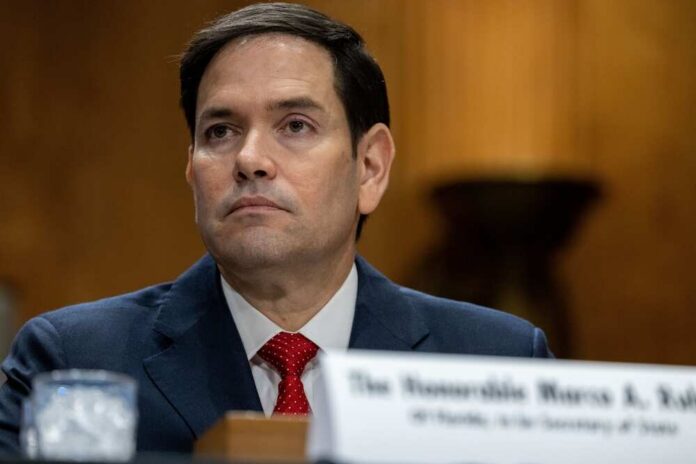
At a major security summit in Germany, America’s top diplomat described “godless communist revolutions” and globalist policies as forces that helped push the West into decline, raising fresh questions about whether the U.S. government is defending freedom or protecting elites.
Story Snapshot
- Marco Rubio says “godless communist revolutions” and anti‑colonial movements helped speed Western decline after World War II.
- He argues communism, mass migration, and climate “extremism” threaten culture, jobs, and basic freedoms in the United States and Europe.
- Critics call his claims “historical revisionism” and accuse him of using fear of communism to justify U.S. power and corporate interests.
- Rubio’s speech fits a long U.S. pattern of using anti‑communist language to rally allies and support America‑First style policies.
Rubio’s Munich Speech: Communism, Decline, and a Civilizational Fight
At the Munich Security Conference, Secretary of State Marco Rubio told European leaders that Western empires began to fall after 1945, pushed down by “godless communist revolutions” and anti‑colonial movements that reshaped the world. He tied this to a larger story of civilizational decline by choice, saying Western countries embraced bad ideas that weakened their societies. For many Americans, this touches a nerve: the sense that core values, faith, and national pride have been chipped away for decades by distant elites.
Rubio also warned that in chasing a “world without borders,” Western nations opened the door to mass migration that now threatens social cohesion, cultural continuity, and the future of their people. He argued that leaders bought into a “dangerous delusion” that free trade and global rules alone could keep the peace, while ignoring how rivals protected their own industries and workers. This message lines up with frustration on both the right and the left that globalization helped big corporations and hurt ordinary citizens in factory towns and rural communities.
Communism, Trade, and “Slave Labor” in Rubio’s America‑First Doctrine
Rubio’s broader foreign policy vision links communism to economic and moral harm that reaches directly into American life. In his confirmation hearing, he called the Communist Party of China the most dangerous near‑peer adversary the United States has ever faced, saying it threatens both freedom and our way of life. He described communist‑aligned systems as using “slave labor” to produce cheap goods, creating horrific humanitarian crises and undercutting workers in the rest of the world. These claims echo worries from many Americans who see unsafe imports and lost jobs as two sides of the same rigged system.
At Munich and in official statements, Rubio argued that Western leaders embraced a “dogmatic vision” of free and unrestricted trade, shuttering plants and deindustrializing whole regions as production moved abroad. He said some countries shielded their own firms while America exposed its workers, letting adversaries gain control over key supply chains. Yet critics note a tension here: communism is built on heavy state control of the economy, not free markets, so calling free‑trade dogma “communist‑aligned” muddles the basic definitions. That logical gap has led opponents to question whether the rhetoric is more about political branding than careful economic analysis.
Pushback: Charges of Revisionism, Propaganda, and Elite Interests
Writers at Black Agenda Report and Common Dreams harshly criticized Rubio’s Munich speech, calling his claim that decolonization was part of a “sinister communist plot” an act of “historical revisionism” and even an “outright lie.” They argue he offered no documentary proof of a secret communist plan behind independence movements, which historians usually tie to economic exhaustion and local nationalism rather than a single foreign conspiracy. For many viewers, this raises a familiar fear: that officials twist history to defend today’s power structures, not to tell the truth.
WATCH: Marco Rubio lays out a sweeping rebuke of communism, calling it a system that strips away everything that makes people aspire to greatness:
"Communism does not sound good in theory… The world it envisions for all of us is small, flat, gray… without courage, creativity… pic.twitter.com/OKWlLmu0Nj
— Kusi Yeboah Kwame Isaac (@IsaacKwameKusiY) July 16, 2026
Critics also say Rubio’s language about “godless” communism and civilizational decline fits a long pattern where U.S. leaders use anti‑communist talk to rally allies and justify military, economic, or covert actions. From the Truman Doctrine in 1947 to Ronald Reagan’s support for anti‑communist rebels in the 1980s, Washington has often painted communist forces as moral enemies to build support for its own global agenda. In that light, Rubio’s speech looks less like a break from the past and more like an updated script, now blended with Trump‑style America First themes and modern fights over climate and migration.
What This Fight Over Communism Means for Ordinary Americans
For many conservatives over forty, Rubio’s message sounds like long‑overdue honesty about how globalism, climate “cults,” and open borders hurt jobs, raise energy costs, and weaken national pride. For many liberals in the same age group, his words feel like a push to roll back social welfare, ignore climate science, and target immigrants in ways that deepen inequality. Yet both groups share a deeper frustration that shines through this debate: they doubt that officials in Washington are truly working for them rather than for wealthy donors and entrenched interests.
Rubio’s harsh talk about communism and globalism taps into that anger but does not by itself prove who is right about the causes of decline. His strongest claims about communism erasing courage, creativity, heroes, and glory are moral judgments, not backed with clear data or case studies. Critics, for their part, attack his rhetoric and motives yet often rely on broad consensus rather than detailed evidence to answer his specific charges. For citizens trying to hold on to the American Dream, this back‑and‑forth is a reminder to look past slogans—whether anti‑communist or anti‑elitist—and demand hard facts and transparent policies from everyone in power.
Sources:
facebook.com, state.gov, youtube.com, blackagendareport.com, rev.com, axios.com, npr.org, wlrn.org, bbc.com, en.cibercuba.com