Peru just sparked a political firestorm by signing a $1.5–$3.5 billion F-16 deal that shows how powerful countries and defense companies can lock in huge commitments even when a government is in crisis.
Story Snapshot
- Peru has signed to buy at least 12 new F-16 Block 70 fighter jets, with money already paid and options that could bring the fleet to 24 aircraft.
- The deal moved forward during a deep political crisis, with the president trying to delay it and key ministers resigning in protest.
- U.S. and Lockheed Martin officials say the contract is real and binding, while some Peruvian leaders claim it is “on hold,” creating a confusing split story.
- The purchase highlights a wider Latin American pattern: big secretive defense deals, weak transparency, heavy debt, and growing public distrust of political and military elites.
Peru’s Big F-16 Bet: What Was Signed and Paid
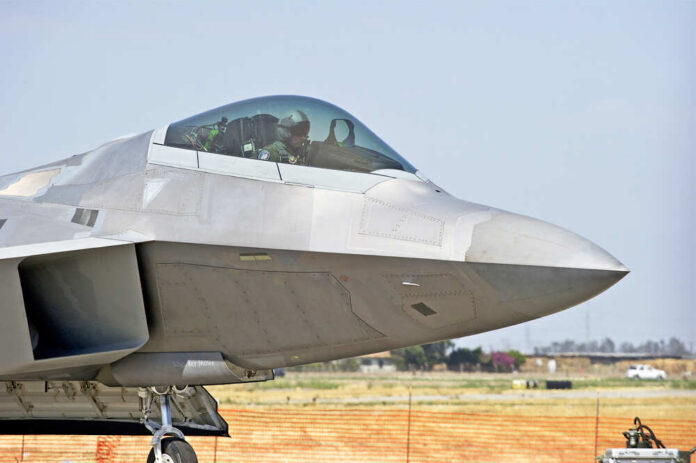
Peru’s government has moved to buy **F-16 Block 70** fighter jets from the United States, locking in a major upgrade of its aging air force. On April 20, 2026, Defense Minister Carlos Díaz Dañino signed a technical agreement at Las Palmas Air Base for 12 aircraft, a step backed by a Lockheed Martin press release on April 23 confirming Peru’s selection of the F-16 Block 70. Peru’s Ministry of Economy and Finance then reported a first payment of 462 million dollars on April 22, showing real money has already left public accounts.
Earlier, in September 2025, the United States Defense Security Cooperation Agency had notified Congress of a possible Foreign Military Sale worth 3.42 billion dollars for 10 single-seat and 2 two-seat F-16 Block 70 aircraft and support. Lockheed Martin now says Peru will join 29 other nations flying the F-16, and U.S. Southern Command publicly praised the decision as a boost to sovereignty and partnership. The contract reportedly includes an option for 12 more aircraft, plus an aerial refueling tanker and new weapon types tailored to Peru, pushing the broader envelope near 2 billion dollars in local budgeting.
Political Turmoil and Conflicting Stories at the Top
Even as the jets were signed and funded, Peru’s politics exploded around the deal. President José María Balcázar tried to delay the decision and said any next administration should take responsibility, raising doubts about whether he fully backed the purchase. Within days, both the defense minister and foreign minister resigned, stating they disagreed with the president’s attempt to stall the contract, which suggests serious splits inside the government and questions about who is really in charge.
At the same time, the United States ambassador in Lima publicly welcomed the agreement and spoke of two squadrons of 12 F-16s, with first deliveries expected around 2029. Lockheed Martin’s own Peru F-16 page and press release treat the sale as a done deal, not a maybe. Yet local media and some leaders describe the contract as “stalled” or “on hold,” and one interim president claimed the process was paused, directly clashing with U.S. and company statements. This gap between official foreign messages and domestic political talk feeds public suspicion that leaders are hiding the truth.
Money, Secrecy, and Why Ordinary People Are Angry
The F-16 story taps into anger that many Americans and Latin Americans share about big government deals done far from public view. Reports say Peru will use domestic borrowing to finance about 2 billion dollars for the wider package, tying future taxpayers to heavy debt in a country that already faces economic strain. Figures in the media bounce between 1.54 billion, 2 billion, 3.42 billion, and 3.5 billion dollars, with no simple public breakdown of what each number really covers, which makes it hard for citizens to know what they are truly paying for.
Regional research shows this is not rare: large military purchases in Latin America often use resource-backed funds and weak oversight, and they regularly trigger political crises, resignations, and claims of corruption. Social media channels now frame Peru’s F-16 buy as a “secret deal” tied to impeachment threats and U.S. pressure, while mainstream outlets highlight the resignations and protests. Algorithms tend to push the most dramatic clips, so many people see more anger and rumor than careful facts, deepening the sense that a distant “deep state” of politicians, generals, and foreign companies makes huge choices without honest debate.
F-16s, Regional Power Games, and the LeBron James Analogy
The F-16 itself has a long record as a workhorse fighter; more than 4,600 have been built for dozens of countries, and modern Block 70 jets add advanced radar and electronics. Some analysts compare the aircraft to a star athlete like LeBron James—still a top performer decades into its career and now signing with a new “team” in Peru. For Peru’s leaders, choosing this jet is meant to show they are serious about defense and can stand toe-to-toe with neighbors like Chile, which has flown F-16s for over twenty years.
A US delegation at a biennial conference of defense ministers from across the Americas hosted this week in Peru asked nations to increase defense budgets to close to 3.5% of GDP, and praised Peru for a $3.5 billion deal to buy US-made F-16 fighter jets.https://t.co/kpkH2lkjcE
— Maya Averbuch (@mayaaverbuch) July 8, 2026
Yet the LeBron-style “all-star signing” comes with big tradeoffs that matter to regular citizens. Deliveries will not start until around 2029, so Peru will pay now but wait years for real capability gains. Chile already has a mature fleet, early warning planes, and refueling support, which means Peru’s purchase mostly narrows a gap, not creates clear regional dominance. For people on both the right and the left who feel their own governments favor global deals, defense contractors, and political optics over daily economic struggles, the Peru case is another warning: without strong transparency and public control, billion-dollar defense decisions can become tools of elite power battles rather than true national security.
Sources:
19fortyfive.com, aerotime.aero, youtube.com, prnewswire.com, pe.usembassy.gov, reddit.com, dsca.mil, facebook.com, breakingdefense.com, lockheedmartin.com, theaviationist.com, aerospaceglobalnews.com, aviacionline.com, upi.com, sipri.org, usip.org, legalblogs.wolterskluwer.com, elibrary.imf.org, elgaronline.com