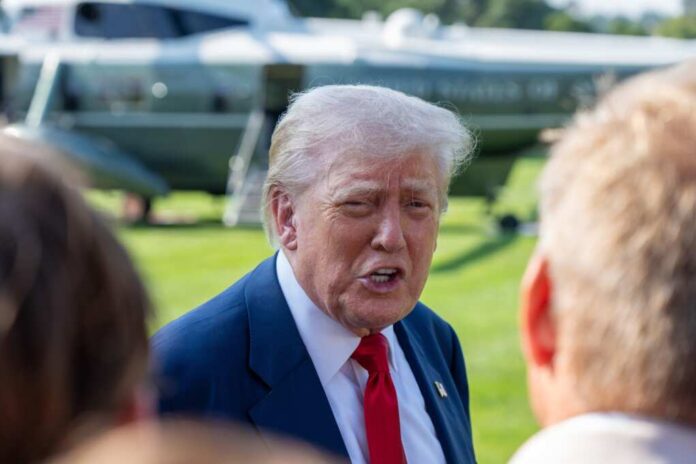
Democratic demands for negotiation with President Trump escalate as a government shutdown looms, threatening national stability.
Story Snapshot
- Potential government shutdown due to unresolved budget negotiations.
- Democratic leaders demand a meeting with President Trump.
- Disagreements focus on spending priorities and coronavirus aid.
Democrats Push for Urgent Meeting with Trump
As the fiscal month’s end approaches, Democratic leaders are demanding an urgent meeting with President Donald Trump to negotiate a funding agreement and avert a government shutdown. The standoff centers around disagreements over spending priorities, with both parties blaming each other for the impasse. The Democrats are pushing for comprehensive funding that addresses pandemic relief and other critical sectors, while Republicans emphasize sector-specific relief, particularly for agriculture.
The House has already advanced fiscal year spending bills, but the Senate has delayed the appropriations process, making a continuing resolution necessary to keep the government operational. The House introduced a resolution to fund the government through December 11, yet Senate Republicans criticize it for omitting essential agricultural aid. The looming deadline of September 30 intensifies the urgency, as failing to agree would disrupt federal services and potentially furlough government employees.
Backdrop of Political Brinkmanship
Federal shutdowns have become a recurring issue, often due to partisan disagreements over budget priorities. The current situation is exacerbated by the ongoing COVID-19 pandemic and a series of natural disasters, raising the stakes for a timely resolution. Historical precedents, such as the 2018-2019 shutdown over border wall funding, demonstrate the far-reaching impacts of such political standoffs on public trust and government functionality.
Both parties are entrenched in their positions, with Democratic leaders like House Speaker Nancy Pelosi advocating for broad relief measures, while Senate Majority Leader Mitch McConnell focuses on targeted sector relief. The power dynamics in a divided government contribute to mutual distrust and public blame-shifting, complicating negotiations further.
Economic and Social Implications
The potential shutdown poses significant short-term and long-term implications, including disruptions in federal services and delayed aid during crises. Federal employees face the risk of furloughs, and sectors reliant on government funding, such as education and health, face uncertainty. Economically, government payment disruptions could create market instability, while socially, the reduced access to services heightens public anxiety during these challenging times.
The blame game between parties may influence upcoming elections, further deepening political divides. As the situation unfolds, the need for strategic negotiation and compromise becomes increasingly pressing to safeguard government operations and public trust.
Watch the report: Democrats and Republicans debate spending measure ahead of potential government shutdown
Sources:
NASFAA, House Releases Continuing Resolution to Fund Federal Government
Congress.gov, H.Con.Res.14 – 119th Congress
NPR/Ideastream, Week in politics: Jan. 6 report; federal budget deal; Pelosi’s final days as speaker