Israel’s move to seize 70% of Gaza has opened a new front of pressure on Hamas, even as global critics rush to brand the security push a “ceasefire violation” and demand new constraints on a key American ally.
Story Snapshot
- Israeli Prime Minister Benjamin Netanyahu has ordered the military to expand control of Gaza to about 70% of the territory.
- The move is framed in Israel as a step-by-step pressure campaign against Hamas after years of rocket fire and terrorism.[2]
- Hamas and many foreign critics immediately denounced the order as a breach of the 2025 ceasefire and a deepening “occupation.”[1]
- The dispute highlights growing pressure on President Trump’s administration to either back Israel’s security push or bend to international demands.
Netanyahu’s 70% Directive: What He Actually Ordered
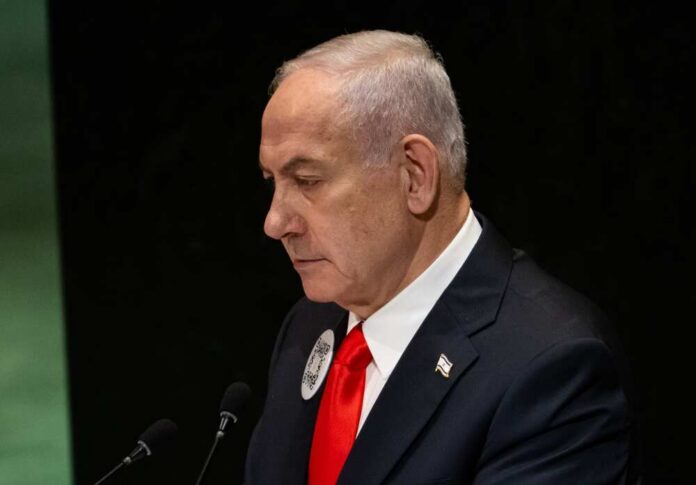
Israeli Prime Minister Benjamin Netanyahu publicly stated that Israel already controls roughly 60 percent of the Gaza Strip and that he has directed the Israel Defense Forces to expand that control to about 70 percent.[2] Speaking at the Jordan Valley Conference, he described this as a deliberate, incremental objective, saying “Israel controls 60% of the Gaza Strip… My directive – 70%. We’ll start there.”[2] Video clips and regional coverage repeated that the new target reflects a step-by-step expansion of ground control.[3][4]
Reports indicate that Israeli forces had already pushed beyond earlier ceasefire “lines” on the ground, operating inside Gaza to dismantle Hamas tunnels, command centers, and rocket capabilities before Netanyahu’s latest statement.[2][3] The new 70 percent objective effectively formalizes what military analysts say has been a gradual widening of operational areas as Israel seeks to deny Hamas safe zones to regroup.[3] For many Israelis, especially those living under years of rocket threats, this is seen as unfinished business from prior conflicts that were left half-resolved.
Claims of Ceasefire Violations and Humanitarian Criticism
Hamas reacted within hours, accusing Netanyahu of a “blatant violation” of the October 2025 ceasefire deal that had set limits on Israeli troop presence and control inside Gaza.[1] Hamas spokesman Bassem Naim said Netanyahu’s announcement to expand control over 70 percent of the territory came “while the killing and starvation continue,” portraying the move as proof that Israel negotiates in bad faith and uses ceasefires only to tighten its grip.[1] Left-leaning international outlets and activists quickly echoed that language, branding the expansion as a direct breach of a United States–brokered truce.
Some foreign reports emphasized that Israel already controls more land than it originally agreed to under the ceasefire and warned that the new order intensifies humanitarian concerns for civilians living in a shrinking, militarized space. Critics describe the maneuver as a form of creeping occupation, arguing that incremental “security zones” and “buffer areas” become permanent facts on the ground over time. Those arguments are now feeding fresh calls in Europe and parts of the American left for weapons embargoes, sanctions, or International Criminal Court action against Israeli leaders.[1] That pressure campaign is designed to box in Washington and limit how firmly any United States administration can back Israel’s security choices.
Security Logic, Hamas Reality, and What It Means for the United States
Netanyahu and his supporters frame the 70 percent goal as a hard-nosed response to a hard reality: Hamas has repeatedly used every pause, ceasefire, and humanitarian corridor to rearm, rebuild, and reposition for the next round of attacks on Israeli civilians.[2][3] From this perspective, partial control and narrow, symbolic buffer zones simply invite more rocket fire while leaving Israeli communities exposed. Expanding operational control is therefore presented as a pressure tactic, tightening the noose on Hamas command centers and cutting off routes for smuggling and regrouping.[2][3] It stops short of announcing formal annexation but signals that Israel will not revert to the pre-war map at Hamas’s demand.
Hamas accuses Netanyahu of ‘blatant violation’ of ceasefire for ordering seizure of 70% of Gaza https://t.co/d5W3QPgxjB via @timesofisrael
— reuben poupko (@poupko) May 29, 2026
For American conservatives, the pattern looks familiar: Israel takes concrete steps to neutralize a terrorist enemy, while Hamas and its international echo chamber rush to the microphones to cry “violation,” “war crimes,” and “starvation” in order to reset the political conversation.[1] Many of the same activists who push open borders, climate extremism, and gun control at home now demand that Washington restrain Israel’s right to self-defense abroad. For President Trump’s administration, the showdown over this 70 percent order is a test of whether America stands by an ally’s legitimate security needs or caves to global institutions that rarely condemn Hamas rockets with equal force.
Sources:
[1] Web – Netanyahu Orders Israeli Army to Seize ‘70% of Gaza Strip’
[2] Web – Netanyahu says he ordered IDF to seize 70% of Gaza Strip, well …
[3] Web – Hamas accuses Netanyahu of ‘blatant violation’ of ceasefire for …
[4] Web – Netanyahu orders Israeli military to seize 70% of Gaza, expanding …