America’s favorite game is slipping behind paywalls and streaming hoops, and now Congress is finally demanding that National Football League Commissioner Roger Goodell explain who really benefits from the league’s new media empire.
Story Snapshot
- Senators are probing how the shift from free broadcast games to exclusive streaming deals is hitting fans in the wallet.
- Roger Goodell has already refused a Senate request to testify on sports streaming, prompting talk of tougher steps.[2][4]
- House Republicans previously pressed Goodell and the National Football League for documents and testimony, proving the league can be forced to answer questions.[1][2][5]
- Conservatives are raising questions about market power, access for everyday fans, and whether special federal protections for sports broadcasting are still justified.[7][8]
Congress Fixes Its Gaze on the NFL’s Streaming Power
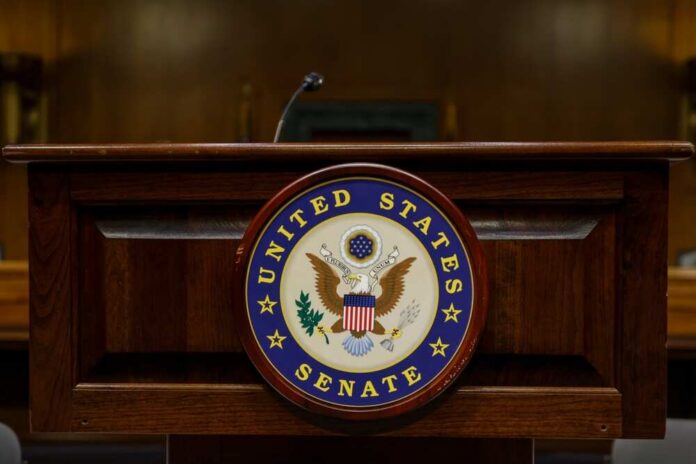
Senate and House Republicans are sharpening their focus on how the National Football League’s media strategy is pushing more live games off traditional free television and onto subscription streaming platforms, where many working families must juggle multiple services just to follow their team.[2][4] The Senate Committee on Commerce, Science, and Transportation scheduled a 2025 hearing titled “Field of Streams” to examine how pro sports leagues are using digital and exclusive streaming deals, and specifically asked the National Football League to appear.[4] Chairman Ted Cruz’s letter to Goodell highlighted the “unique federal laws” that govern National Football League broadcast rights and said the committee wanted to understand how the league balances commercial “innovation” with duties under those special protections.[2][4] That framing put front and center a core conservative concern: when Congress gives a powerful entity legal privileges, it has every right—and responsibility—to scrutinize how that power is used.
National Football League leadership declined to send Goodell or another top official to testify at the Senate’s “Field of Streams” hearing, even as executives from Major League Baseball, the National Basketball Association, and the National Hockey League agreed to appear and face questions.[2][4] By skipping the panel, the league signaled that it prefers to explain its streaming strategy on its own terms, through media interviews and press statements, rather than under oath before elected lawmakers and frustrated fans.[3][4] At the same time, Goodell has defended streaming expansion as an effort to “reach the broadest audience,” arguing in a separate interview that new platforms allow the league to go “beyond our current platforms” with long-standing network partners.[3] That message paints streaming as progress, but it sidesteps the real issue for many viewers: when each “new option” means another monthly bill and another app, families are paying more to get what used to arrive through a simple antenna.
House Republicans Build a Record for Tougher Oversight
The current push to grill Goodell on streaming rides on a history of congressional oversight that proves the National Football League can be compelled to cooperate when lawmakers are serious and organized.[1][2][5] During the Washington Commanders workplace investigation, the House Committee on Oversight and Reform pressed Goodell for documents and testimony about how the league handled misconduct allegations, eventually bringing him in for roughly two hours of questioning.[1] Reporting from that period shows that the committee set deadlines, demanded internal records, and openly discussed using subpoenas to secure further cooperation from National Football League and team executives.[1][2][5] The league publicly described itself as “cooperating” and acknowledged that it had already answered written questions, confirming that it treats Congress not as a distant annoyance but as a serious institution it must engage.[2] That history matters now, because it undercuts any claim that the National Football League is a purely private business beyond the reach of public accountability when it leverages federally shaped media markets.
House Judiciary Committee Republicans have already laid important groundwork tying sports broadcasting to antitrust and consumer-access concerns that should worry any fan who cares about fair markets and open access.[7][8] In 2025 the committee formally requested briefings from major sports leagues about the “sports broadcasting market” and signaled fresh interest in how long-standing legal exemptions interact with today’s fragmented viewing landscape.[7] An August 2025 letter from Chairman Jim Jordan to Goodell noted that the sports broadcasting market has “changed significantly” since Congress granted special protections, and referenced recent antitrust cases raising “important” questions about competition in this space.[8] That correspondence positions House conservatives to argue that when a league enjoys unique federal treatment, the public deserves to know whether exclusive streaming carve-outs and complicated subscription bundles are serving fans or simply maximizing leverage over captive audiences.
What Is at Stake for Fans, Markets, and Conservative Principles
Behind the technical fight over subpoenas and testimony is a straightforward pocketbook question for millions of conservative fans: how many separate services should they really have to buy to watch their hometown team?[2][3][4][8] The research record here does not yet include full contract terms or hard economic data on how National Football League streaming exclusives affect prices, blackouts, or overall reach, so lawmakers still lack a complete picture of consumer harm.[8] But they do have clear evidence that Congress has both the authority and the precedent to demand those documents and require Goodell to explain, under oath, how the league weighs fan access against commercial gain.[1][2][5][7] For conservatives who believe in limited but effective government, that is the proper role of oversight: not micromanaging business decisions, but making sure a powerful, congressionally favored organization is not exploiting its position to nickel-and-dime the very public that built it.
Future hearings will test whether Congress can move beyond partisan theatrics and force a fact-based conversation about sports, streaming, and market power, or whether the National Football League will continue to frame every concern as an attack on “innovation.”[2][3][4][7][8] If committees obtain the underlying media contracts, internal distribution analyses, and expert economic studies, they will be able to measure whether exclusive streaming truly expands access or mainly fragments it into ever-pricier packages.[8] If they fail, then the combination of special legal protections and opaque platform deals will deepen a two-tier system where elites sit in luxury suites while regular families bounce between apps, passwords, and rising monthly charges. For a country that still gathers around football as a shared civic ritual, that is more than a tech issue—it is a test of whether concentrated power answers to the public at all.
Sources:
[1] Web – Congress asks NFL Commissioner Roger Goodell to testify about league’s …
[2] Web – Commissioner Roger Goodell testifies before Congress; committee …
[3] Web – NFL partially responds to congressional inquiry over Washington …
[4] YouTube – EXCLUSIVE: Congress pressures Roger Goodell to turn …
[5] YouTube – Congress requests testimony from Roger Goodell, Daniel Snyder
[7] Web – Roger Goodell says NFL will cooperate with Florida AG probe into …
[8] Web – Judiciary Committee Requests Briefing from Major Sports Leagues …