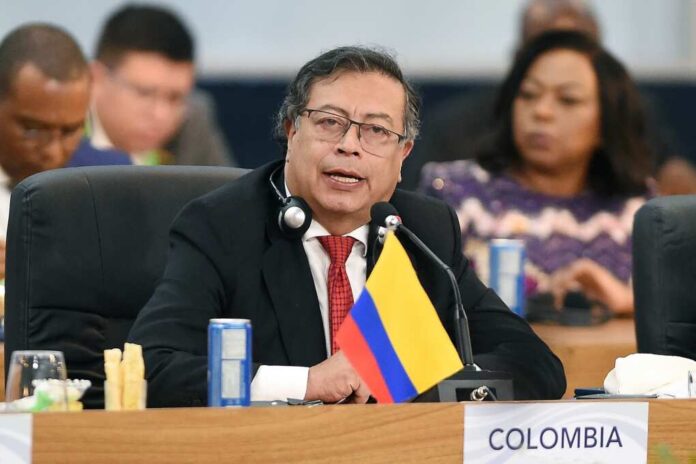
A new diplomatic rift erupts as Trump revokes the Colombian President’s visa, challenging international norms.
Story Overview
- The Trump administration revokes Colombian President Gustavo Petro’s U.S. visa.
- This move is linked to Petro’s controversial statements against U.S. policy on Gaza.
- The visa revocation escalates already tense U.S.-Colombia relations.
- Petro responds by accusing the U.S. of violating international law.
- This action marks a rare diplomatic fallout between allied nations.
Trump Administration’s Tough Stance
The Trump administration has taken a decisive step by revoking Colombian President Gustavo Petro’s U.S. visa. This unprecedented move comes in response to Petro’s call for American military personnel to defy orders concerning the Gaza conflict. Such actions by a head of state challenge U.S. foreign policy and have not been tolerated, reflecting President Trump’s firm stance on maintaining American sovereignty and authority.
As Petro’s public comments during a pro-Palestinian demonstration outside the United Nations headquarters urged U.S. soldiers to disregard presidential directives, the Trump administration swiftly acted to send a clear message. This incident highlights the administration’s commitment to addressing foreign interference and safeguarding national interests from what it perceives as reckless diplomacy.
The President of Colombia, Gustavo Petro, called on his citizens to join the fight against Israel and also urged American soldiers to refuse Trump's orders.
The U.S. has officially REVOKED his visa.
Bye. 👋 pic.twitter.com/VhJLvMQLm5
— Vivid.🇮🇱 (@VividProwess) September 27, 2025
Petro’s Defiant Response
In response to the visa revocation, President Petro returned to Bogotá, where he began a social media campaign criticizing the Trump administration. Petro accused the U.S. of violating international law and provocatively suggested relocating the United Nations headquarters from New York to Doha, Qatar. These statements have further strained diplomatic communications between the two nations, showcasing Petro’s willingness to confront U.S. policy.
Petro’s actions are seen as part of a broader strategy to assert Colombia’s independence in foreign policy, particularly regarding the Israel-Gaza conflict. This stance, however, risks isolating Colombia from traditional allies and may have serious implications for future international cooperation.
Implications for U.S.-Colombia Relations
The revocation of Petro’s visa marks a significant downturn in U.S.-Colombia relations, which have historically been strong due to mutual interests in security and anti-narcotics efforts. The diplomatic freeze could disrupt key areas of bilateral cooperation and affect economic and security interests on both sides. The Trump administration’s decision is seen as a warning to other leaders who might consider publicly challenging U.S. policies.
In the long term, this incident may force a realignment of Colombia’s foreign relations and increase polarization in Latin America. For the U.S., it sets a precedent in handling dissent from allied nations, potentially altering diplomatic dynamics in the region.
Watch the report: Trump admin revokes Colombian president’s visa over alleged ‘reckless and incendiary actions’ – YouTube
Sources:
Al Jazeera – U.S. revokes Colombian President Petro’s visa over ‘reckless actions’ in NYC
The Guardian – U.S. revokes visa for Colombian President Gustavo Petro
PBS NewsHour – U.S. revokes visa for Colombian President Petro
USA Today – Trump administration revokes Colombian President Gustavo Petro’s visa