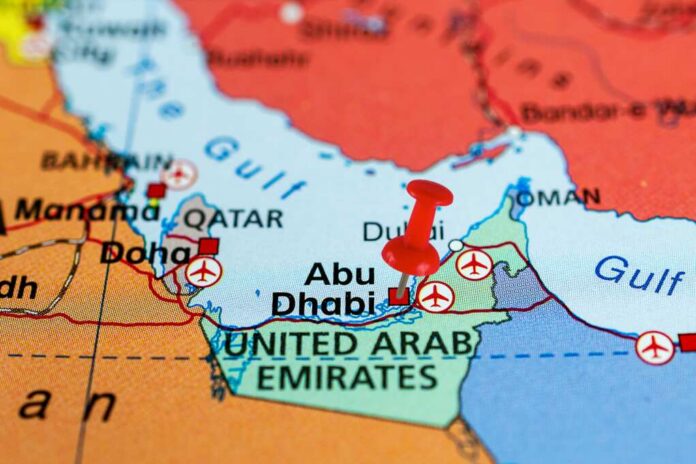
As winter blackouts spread across Ukraine, Trump’s diplomats are back at the table in Abu Dhabi trying to stop a war that still rages even during “pause” promises.
Story Snapshot
- U.S., Ukrainian, and Russian representatives opened a second round of trilateral peace talks in Abu Dhabi, following a first round held there in January 2026.
- The talks resumed just after a major Russian drone-and-missile attack on Ukrainian energy infrastructure, intensifying pressure for an agreement during winter conditions.
- Ukraine and Russia remain far apart on core issues: Donbas withdrawal demands, control of the Zaporizhzhia Nuclear Power Plant, and enforceable post-war security guarantees.
- Trump publicly framed an energy-strike “pause” as running “Sunday to Sunday,” while Zelenskyy questioned Russian compliance and asked for a U.S. response to continued strikes.
Talks Resume in Abu Dhabi Under Trump’s Mediation
American, Ukrainian, and Russian delegations convened in Abu Dhabi for a second round of trilateral negotiations aimed at ending Russia’s full-scale invasion of Ukraine. The meeting format reflects the Trump administration’s direct mediation approach, with the talks beginning Wednesday and expected to wrap Thursday. Ukraine’s Rustem Umerov said the process starts in trilateral settings, then splits into working groups focused on specific disputes before syncing positions again.
Russia’s spokesperson Dmitry Peskov said Moscow continues its “special military operation” while keeping “the door” open to a settlement. That dual message underscores the central tension: diplomacy is proceeding alongside active military operations, meaning any negotiation progress must be judged against facts on the ground.
Watch:
https://youtu.be/IZQERK8CH0g?si=4jg9Dq2yca5OI9dd
Energy Strikes and a Disputed “Pause” Raise the Stakes
The immediate backdrop to the Abu Dhabi session was a major Russian drone-and-missile bombardment targeting Ukraine’s energy infrastructure. Ukrainian officials said the strikes violated a supposed week-long pause, and President Volodymyr Zelenskyy publicly demanded a U.S. reaction. President Trump, however, clarified that the pause ran “from Sunday to Sunday,” disputing the violation claim on timing grounds while acknowledging the limited scope of the arrangement.
Military exchanges continued even as negotiators met. Reports cited Russia launching 105 drones overnight into Wednesday, with 88 shot down or suppressed and 17 reaching targets; Ukraine also reported downing 24 Russian drones. These details matter because energy attacks during winter create direct humanitarian pressure, and they also test whether any limited ceasefire concepts can be monitored and enforced.
Three Core Disputes Block a Fast Deal
Russia’s territorial demands remain the biggest obstacle. Moscow continues to demand that Ukraine withdraw fully from the Donbas region, while Kyiv rejects that demand outright. The Zaporizhzhia Nuclear Power Plant, occupied by Russian forces since March 2022, also remains contested and politically explosive because it combines sovereignty questions with nuclear safety concerns. These are not side issues; they are the heart of what any settlement would have to address in concrete terms.
Security guarantees are the other make-or-break issue, and they directly implicate U.S. commitments. Ukraine is seeking binding American involvement in post-war guarantees to deter renewed aggression, while Russia rejects NATO troop deployments after the war.
What Conservatives Should Watch: Verification, Not Vibes
From a constitutional, America-first perspective, the most responsible posture is demanding measurable terms: defined ceasefire zones, explicit timelines, and enforcement mechanisms that do not quietly morph into open-ended U.S. obligations. The available reporting confirms talks are “constructive” in tone, but it does not show a breakthrough on the core disagreements. Until there is written specificity on territory, plant control, and guarantees, the public should assume the war machine is still running.
JUST IN – Ukraine delegation arrives in UAE for Russia talks: spokesperson to AFP https://t.co/AIe5UmZTC8 pic.twitter.com/30m0Na0jy1
— Insider Paper (@TheInsiderPaper) February 4, 2026
The Abu Dhabi format—trilateral sessions plus targeted working groups—could help isolate issues and reduce grandstanding, but only if the parties can agree on basic definitions, including what counts as compliance. Zelenskyy’s demand for a U.S. reaction to ongoing energy strikes and Trump’s “Sunday to Sunday” framing show how fast narratives diverge even among partners.
Sources:
Trilateral US-Ukraine-Russia peace talks resume in UAE after major energy attack
Second round of Ukraine-U.S.-Russia talks begins in Abu Dhabi
Kyiv Post coverage on Abu Dhabi talks (Ukraine-U.S.-Russia)
Xinhua report on Ukraine-Russia-U.S. talks and related developments