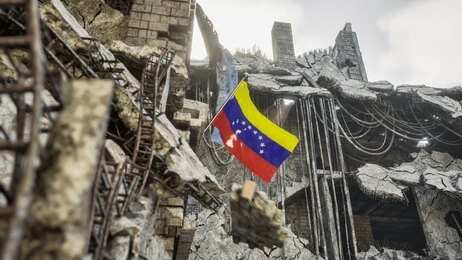
More than 1,400 people are dead in Venezuela, and rescuers in some neighborhoods say help still hadn’t arrived two days after twin earthquakes — yet the U.S. military launched one of its fastest overseas disaster responses in years.
Story Snapshot
- Twin earthquakes struck Venezuela on June 24, 2026, killing more than 1,430 people and injuring over 3,200 more.
- The U.S. military deployed search and rescue teams, cargo planes, and helicopters within days — one of the largest American disaster responses in the region in years.
- Twenty-seven countries sent rescue teams and aid, suggesting Venezuela’s own disaster response was quickly overwhelmed.
- Residents in some Caracas neighborhoods reported no government help had arrived two days after the quakes, while families turned to volunteer websites to find missing loved ones.
A Disaster That Shook a Nation Already on Its Knees
Venezuela was already struggling before the ground moved. Years of economic collapse, crumbling infrastructure, and political turmoil had left the country with little cushion for a major disaster. Then twin earthquakes hit on June 24, 2026. Official authorities confirmed more than 1,430 deaths and 3,238 injuries as of June 27. [1] Rescue workers described racing against time nearly three days after the initial strikes, with aftershocks continuing to rattle survivors and hamper recovery efforts.
The scale of destruction made it clear that Venezuela could not handle this alone. Buildings collapsed across multiple regions. Airports suffered damage that blocked large cargo planes from landing. Thousands of families began searching for missing loved ones using volunteer-run websites — “Desaparecidos Terremoto Venezuela” and “Venezuela Te Busca” — because no reliable official system was available. [3] That gap between what people needed and what the government could deliver became one of the defining images of the crisis.
The U.S. Moved Fast — and Big
The American response was swift and large. The U.S. military deployed Urban Search and Rescue teams from California and Virginia, along with Army CH-47 Chinook helicopters from Joint Task Force-Bravo. C-17 cargo aircraft loaded with supplies flew into the region. The U.S. State Department confirmed active efforts to help repair damaged airports so heavier aid planes could land. [13] The State Department called the response a humanitarian partnership, not an intervention — and Venezuela’s interim President Delcy Rodríguez publicly thanked President Trump and his administration for the support. [12]
Teams arrived at three receiving airfields — El Libertador, Maiquetía, and Arturo Michelena — coordinated with Venezuela’s interim government. [15] The speed and size of the American deployment drew attention. U.S. Southern Command described it as a surge of military assets unlike anything seen in the region in recent memory. For a country that has had a complicated, often hostile relationship with Washington, the cooperation was notable — and for many Americans watching, it was a rare moment of seeing U.S. military power used clearly for good.
On the Ground, the Picture Was Darker
International coordination at the airport level did not always translate to help in the streets. Rescuers in Caracas neighborhoods reported that no assistance had reached them two days after the quakes. [8] Twenty-seven countries sent teams and supplies, a level of international response that signals a local system was overwhelmed. [6] Whether that reflects deliberate government failure or simply a disaster that outpaced any government’s ability to respond quickly is a fair question — and one that remains unanswered by any official investigation.
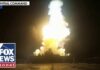
US Southern Command is surging military assets for Venezuela earthquake relief.
Following the devastating quakes on June 24th, SOUTHCOM (working with the State Department and at Venezuela’s request) is deploying unmatched U.S. airlift, logistics, and search-and-rescue… https://t.co/vgD7jINVWk— Buzz Patterson (@BuzzPatterson) June 26, 2026
What is clear is that ordinary Venezuelans were left to rely on volunteers, neighbors, and foreign rescuers while the official response tried to catch up. That pattern — government systems failing the people most in need while aid flows through international channels — is not unique to Venezuela. It echoes frustrations felt by Americans after their own disasters, where bureaucratic slowness and poor coordination have repeatedly left survivors waiting. The faces change. The failure of centralized institutions to reach people fast enough does not. The real measure of this response will come in the weeks ahead, when the cameras leave and the hard work of rebuilding begins.
Sources:
[1] Web – The U.S. military is working around the clock to airlift life-saving …
[3] Web – Responding to Venezuela Earthquakes – State Department
[6] YouTube – Rescue workers race against time in Venezuela after earthquakes
[8] Web – Against impossible odds, hope endures. American search and …
[12] Web – Venezuela Earthquake Relief: Unmatched US Department of War …
[13] Web – U.S. sends military aid After Venezuela quake – Miami Herald
[15] Web – US airplane loaded to help quake rescue efforts in Venezuela SH …