

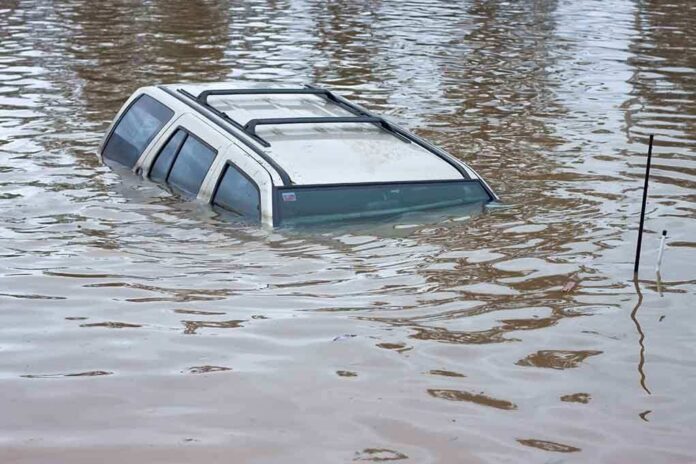
As floodwater swallowed a sinking vehicle in seconds, a TV reporter dropped his mic and helped pull the driver out on camera.
Story Highlights
- ABC journalist Will Murray and bystander Daniel Hainey swam to a sinking vehicle and freed the driver.
- Video captured the rescue in Morayfield as the vehicle stalled and went under within half a minute.
- Murray described bracing against the car while they dragged the driver out through a rear door.
- Safety officials warn most flood deaths come from vehicles entering water; even small depths can move cars.
Reporter And Bystander Pull Driver From Sinking Vehicle
ABC journalist Will Murray was reporting on flash floods in Morayfield, north of Brisbane, when a vehicle entered fast water and stalled. Murray and local resident Daniel Hainey swam to the car as it began to sink. They reached the rear of the vehicle and pulled the driver out just before it disappeared below the surface. ABC reporting identified both rescuers and said the extraction happened in moments as the camera rolled nearby.
The rescue unfolded on Buchanan Road, where floodwater ran over the pavement and into low ground. Video published by the British Broadcasting Corporation shows Murray moving toward the water and entering it with a bystander as the vehicle drifted and dipped. The clip ends with the driver being guided back to the road edge. The sequence confirms the rapid timeline and the visible risk from the current at the scene.
Firsthand Details And Timeline Under Intense Pressure
Murray later explained that the team saw the driver struggling and acted at once. He said he pushed his feet against the vehicle’s side to get leverage while they dragged the man through a rear door. He described the window of time as “20 to 30 seconds” from entry to submersion. That account matches ABC’s timeline, which stressed how quickly floodwater can turn a car into a trap with little room for error.
ABC’s follow-up coverage tied the rescue to a broader severe weather burst across south-east Queensland. Schools closed and forecasters warned of more rain and fast-running creeks. Officials urged drivers to avoid flood routes and to obey closures, noting that road depth and speed can shift within minutes. The Morayfield scene showed both a swift response by bystanders and the unpredictability that marks short, intense flood events.
Why Vehicles In Floodwater Are So Deadly
Australian emergency research shows vehicles in floodwater are a leading cause of flood deaths nationwide. One national review found 96 people died in 74 vehicle incidents from 2001 onward, underscoring a clear pattern: drivers often misjudge depth and force, and roads can fail without warning. Safety campaigns repeat a simple rule: if it is flooded, forget it. The Morayfield rescue ended well, but the same setup often ends in tragedy when the current wins.
Basic physics adds the final warning. Researchers at the University of New South Wales note that even shallow water can float or shift a car. As little as a few inches across a moving sheet can take weight off the tires and reduce control. That is why barriers, signs, and detours matter. Most victims think they can make it. Many are wrong. The safest choice is to stop, turn around, and wait for water to fall or use another route.
What This Moment Says About Us
This rescue shows the best of people under stress. A journalist and a neighbor moved fast and saved a life. It also shows how thin the margin can be when public systems meet extreme weather. Locals faced sudden danger on a busy road as warnings struggled to keep pace. Citizens across the spectrum agree on this problem: we need simple rules that work, clear alerts that reach phones fast, and roads built to handle storms without putting lives at risk.
Sources:
facebook.com, abc.net.au, tmz.com, newsfirst.lk, researchonline.jcu.edu.au, unsw.edu.au