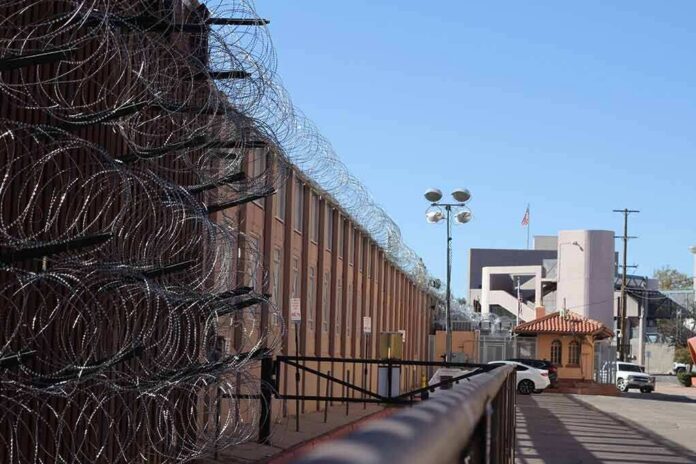
Federal agents say a man hurled a lit bottle at an Atlanta immigration office, igniting the facility’s fence and pushing a tense debate over safety and accountability back into the spotlight.
Story Snapshot
- Federal prosecutors charged Inique Hinton with attempted arson of a federal building and depredation of government property.
- Security video allegedly shows a person lighting an object and throwing it toward the Immigration and Customs Enforcement facility.
- The device hit the exterior fence, sparked flames, and left damage, officials said.
- Investigators traced the suspect through store cameras, a contactless card tap, and license-plate readers, according to reports.
Federal Charges After Alleged Firebombing Attempt
The United States Attorney’s Office for the Northern District of Georgia said a magistrate judge approved a criminal complaint on October 23, 2026. The complaint charged Inique Hinton with attempted arson of a federal building and depredation of government property after an incident outside the Immigration and Customs Enforcement office at 180 Ted Turner Drive in downtown Atlanta. Prosecutors described a thrown, lit object that caused fire damage to the site’s perimeter fence. Several outlets reported the arrest and the charges the same weekend.
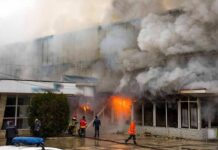
The Justice Department said security cameras recorded a person near the facility, then show that person ignite an item and throw it toward the building. The object struck the fence and flames became visible before crews put them out. No injuries were reported. Officials said the main building did not sustain damage. Authorities recovered a glass bottle, burned cloth, lighter fluid, and a lighter at the scene. These items are consistent with an improvised incendiary device.
How Investigators Say They Identified a Suspect
Investigators described multiple steps that led to Hinton. Reporting by the Washington Times says police and federal agents used nearby store video, a contactless Visa card tap linked to a phone, and license-plate-reader data that placed a Kia Optima near the area before the incident. That trail, the outlet reported, connected Hinton to the scene. Federal officials have not released a full motive, and the case remains in the charging stage, not a conviction. The complaint outlines allegations to be tested in court.
The case drew quick attention because it targeted a federal immigration site. Local and national outlets covered the arrest, repeating core details from law enforcement briefings. WSB-TV, CNN, and 11Alive reported the attempted arson allegations and described the thrown device as a Molotov-style bottle. That common framing tracks with the Justice Department’s account. The government also noted potential penalties tied to arson statutes if a conviction occurs, which can be severe under federal law.
Why This Incident Matters Beyond Atlanta
The Atlanta incident arrives as threats and attacks against immigration facilities have raised alarms among officials and communities. Last year saw a much larger assault on the Prairieland detention center in Texas, where a group used diversions and then gunfire, which injured a police officer, according to legal and media records. The Atlanta case is different in scale and method. But both events show how immigration enforcement sites have become focal points for risk and political anger.
Americans across the spectrum worry about basic safety and equal justice. Conservatives fear that violent protests and soft-on-crime policies put officers and bystanders at risk. Liberals worry about heavy-handed enforcement and the rights of detainees. Both sides agree on one thing: the government must keep people safe and be honest about what is happening. Officials say rapid investigative work in Atlanta used video, payments data, and plate readers to move fast and make an arrest.
The Balance Between Security and Civil Liberties
Public safety depends on stopping real threats. It also depends on fair process and clear facts. In this case, prosecutors describe physical evidence from the scene and a timeline that ties a suspect to the location. News reports say the fire burned the fence, not the main building, which supports the “attempted” charge rather than a completed arson on the structure. The complaint is the start of the legal process. A court will handle the rest, based on evidence and law.
A suspect allegedly attempted to firebomb an ICE facility in Atlanta before fleeing an officer on foot.
Authorities say an incendiary device became caught on a perimeter fence, preventing it from reaching the facility. The FBI is now offering up to $20,000 for information… pic.twitter.com/iVt7OrPZZq
— The Dallas Express News (@DallasExpress) October 22, 2026
The wider fight over immigration policy continues under President Trump, with Republicans in charge of Congress. Some voters blame past leaders for border chaos and high costs. Others blame current leaders for harsh tactics and deepening divides. Incidents like this test whether the system protects people, property, and rights at the same time. Clear reporting, timely trials, and transparent evidence can calm fear and show that the law still works, even when politics run hot.
Sources:
pjmedia.com, justice.gov, wsbtv.com, washingtontimes.com, wsbradio.com, forth.news, us.cnn.com