

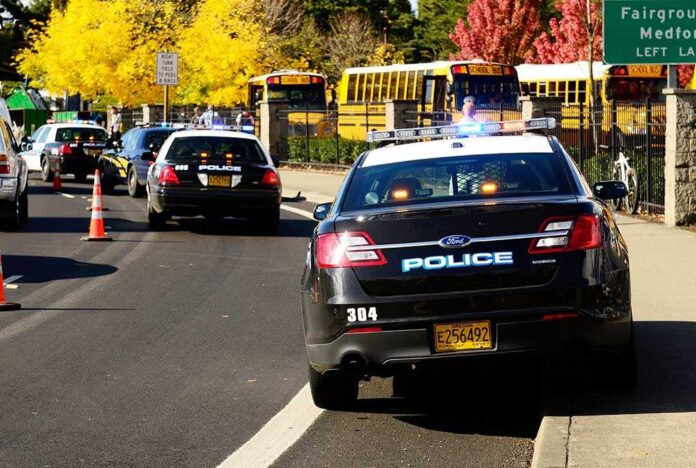
Parents and the Los Angeles school police union are demanding full-time campus officers after district data show sharp rises in student fights and reported bullying.
Story Snapshot
- Parents pressed the Los Angeles Unified School District to restore campus police after a student death and rising safety concerns.
- Union backers cite district figures showing reported fights and physical aggression climbed after officers left campuses.
- A recent report said 17% of students experienced bullying, with physical bullying reportedly rising from 6% to 15% in one year.
- District leaders defend climate coaches and restorative practices, saying officers remain on call for emergencies.
What Sparked The New Push
Los Angeles Unified School District parents urged the board to bring back full-time school police after the death of Franklin High School student Xavier Nungaray-Martinez. Police said the death was ruled a suicide. Investigators said they were looking into bullying claims but had not linked the death to bullying. Family members still described past bullying and asked for stronger protection on campus during an October 7 board meeting.
Speakers at the meeting asked for officers on all campuses, a clear audit of safety data, public reporting of incidents, and parent seats on district safety committees. Their case focused on daily order, faster responses to fights, and consequences for students who harm others. Parents argued that the current model leaves staff to manage violent episodes without the tools or authority they need to keep kids safe.
The Data Cited By Union Backers
The Los Angeles Airport Peace Officers Association said Los Angeles Unified School District board data showed fighting and physical aggression rose from 2,270 incidents to 4,569 after officers were removed from most campuses and replaced with climate coaches. The school police union echoed that argument and backed parents’ calls for restoring full-time officers, saying the trend proves the current approach is not working.
Separate coverage reported that 17% of students said they were bullied in the latest district survey, the highest since the 2021–22 school year, and that physical bullying reports rose from 6% to 15% in one year. Those figures, if confirmed in district releases, suggest more students are encountering direct harm from peers, not just online taunts or rumors.
What The District Changed — And Why
In 2021, the school board reduced the on-campus police footprint and funded climate coaches at secondary schools. Leaders said climate coaches would use social-emotional learning, de-escalation, and conflict resolution to prevent problems and reduce racial disparities in discipline. Police would stay off campus day to day but remain on call for emergencies with a three-to-five-minute response goal, according to the plan.
The district and its supporters say the approach invests in counselors, social workers, and restorative practices that aim to fix root causes of conflict. A district-commissioned survey also found mixed views of police: 51% of students said police made school safer, but only 35% of Black students agreed. The district has pointed to recent year-over-year declines in some categories while it continues prevention efforts.
Where Evidence Is Strong — And Where It Is Thin
Parents and unions can point to clear before-and-after policy shifts and to reported increases in fights and bullying. That offers a timeline and a trend the public can see. But these claims rely on aggregated counts and a student survey. The available reports do not include the raw datasets, campus-level details, or definitions that would show whether changes reflect more incidents, more reporting, or both.
Researchers who study police in schools warn that national evidence is mixed. Some studies find little overall safety benefit and higher discipline or arrest rates when officers increase on campus. Others find drops in certain violent offenses. The tradeoff often comes down to what a community values more: fast enforcement and visible order, or a prevention model that seeks to solve conflicts early but may respond slower to sudden fights.
Why This Matters Beyond Los Angeles
Parents across the political spectrum want safe schools. Many also worry that leaders chase headlines, shift budgets, and leave families to cope with the fallout. The Los Angeles Unified School District fight shows how trust breaks when officials reduce one visible layer of safety without proving the replacement works. A transparent release of data, clear response-time metrics, and campus-level results would help families judge what keeps kids safest.
Sources:
nypost.com, latimes.com, officer.com, m.dailyadvent.com, hoodline.com, univision.com, abc7.com