As Iran’s hard‑line guards fire on cargo ships and choke a vital oil lane, Israel quietly moves to recognize the Armenian genocide, reshaping fault lines that could hit American wallets and test Western resolve.
Story Snapshot
- Iran’s Revolutionary Guard is firing on and seizing commercial vessels in the Strait of Hormuz, threatening global energy supplies.
- The Guard claims ships broke Iranian “permit” rules, but offers no hard proof and ignores international navigation law.
- Human Rights Watch says earlier Iranian ship attacks likely amount to war crimes, raising stakes for U.S. and allies.
- Israel’s move to recognize the Armenian genocide further isolates Iran’s regional partners and pressures Turkey.
Iran Uses Gunfire and Seizures to Control a Global Chokepoint
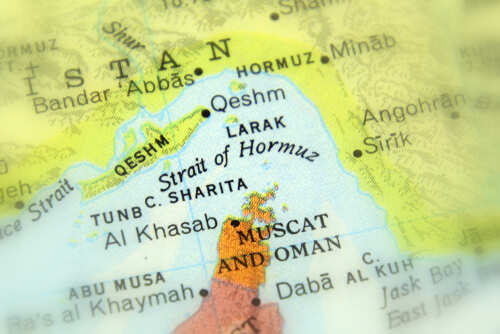
Iran’s Islamic Revolutionary Guard Corps Navy has seized at least two cargo ships, the MSC Francesca and the Epaminondas, in the Strait of Hormuz and moved them to the Iranian coast after opening fire on commercial traffic.[3] Reports from Western media and ship trackers say three vessels came under Iranian fire during this latest flare‑up, with at least one ship reporting hull damage as it tried to exit the strait into the Gulf of Oman.[3] These attacks come on top of dozens of similar incidents since 2024, as Iran builds what analysts call a “permission‑based” blockade that forces ships onto routes Tehran approves.[21]
Iran’s Revolutionary Guard released dramatic video of masked commandos fast‑roping from helicopters onto merchant ships, showcasing the seizure as a show of strength.[4] Human Rights Watch has already accused Iranian forces of deliberately targeting at least two civilian ships in earlier March attacks, the Safesea Vishnu and Mayuree Naree, in ways that appear to qualify as war crimes.[2] The United Nations maritime agency confirmed 17 incidents of damage to commercial vessels in just over two weeks in March, underscoring that these are not one‑off events but a sustained pressure campaign in one of the world’s most important oil lanes.[3]
Tehran’s Legal Story Collides With International Law and U.S. Security
Iran claims these ships were “operating without required authorization” and “manipulating navigation systems,” language state media and Guard statements repeat, but Tehran has not produced independent navigation data, clear radio logs, or technical audits to prove those charges.[3] The Guard also insists any vessel that passes the Strait of Hormuz must first obtain Iran’s permission, a position its naval commander has pushed publicly.[2] That claim clashes with international law experts, who say commercial shipping in such straits is protected by rules of transit passage and cannot be shut down at will by one coastal state.[4]
U.S. Central Command has called earlier Iranian seizures “illegal” and a “blatant violation of international law,” stressing they undermine freedom of navigation that keeps energy prices stable for ordinary families around the world.[5] Maritime security reports note that Iran is not just stopping one or two ships; it has tried to redirect or threaten dozens of vessels, using gunboats and drones to enforce its preferred routes.[21] For American readers, this matters because every shot fired in Hormuz can push up the price of gasoline, home heating, and groceries, after years of pain from inflation driven by bad energy policies and global chaos.
Human Rights Watch Warns of Possible War Crimes at Sea
Human Rights Watch analyzed videos, photographs, and United Nations data and concluded that Iranian forces appeared to deliberately target at least two civilian commercial ships on March 11, which would amount to war crimes if confirmed.[2] Footage reviewed by the group shows explosive‑laden unmanned boats slamming into one tanker, Safesea Vishnu, causing huge fires and severe damage.[2] The group found no evidence that the ships were military targets and noted that Iranian officials themselves boasted about attacking them, while still failing to show any proof of hidden weapons or combat cargo on board.[3]
Between March 1 and 17, the United Nations maritime agency confirmed 17 incidents of damage to commercial ships from 16 apparent attacks across the Strait of Hormuz, the Persian Gulf, and the Gulf of Oman.[3] At least seven sailors and one shipyard worker were killed, four sailors went missing, and ten people were hurt, five of them badly.[3] For conservatives who value clear rules of war and the safety of civilians, these findings highlight why the United States and its allies cannot ignore what is happening in Hormuz, even as they try to avoid another endless Middle East war.
Israel’s Armenian Genocide Step Shifts the Regional Chessboard
While Iran escalates at sea, Israel is reportedly moving toward formal recognition of the Armenian genocide, the mass killing and deportation of Armenians by the Ottoman Empire during World War One. That step would align Israel more closely with many Western democracies that already recognize the genocide, but it puts new pressure on Turkey, a key NATO member that still denies the label and often sides with Iran‑linked blocs on regional issues. This recognition signals that Jerusalem is willing to confront uncomfortable history even as it faces war on multiple fronts.
For American conservatives, Israel’s move highlights a sharp contrast: one regional power trying to stand with historical truth and align with Western values, and another using armed force and legal word games to bully civilian shipping and threaten the global economy. Iran’s pattern of seizures shows why strong U.S. deterrence, a reliable Navy, and energy independence at home remain vital. A weak response means higher costs for American families, more leverage for hostile regimes, and yet another test of whether the free world still has the will to defend open seas and basic human rights.
Sources:
[2] Web – #Iran’s Revolutionary Guards Navy seized two vessels …
[3] Web – Iranian media outlets have published images of a commercial vessel …
[4] Web – Iran says it has seized two ships in Strait of Hormuz after vessels …
[5] YouTube – Iran’s Revolutionary Guards release footage of ship seizures in …
[21] Web – Iran’s Islamic Revolutionary Guard Corps (IRGC) said 28 …